Tracks4Crafts is a international European collaboration project in which Waag’s TextileLab Amsterdam researches the future of interactive textile printing with natural dyes grown in Amsterdam through the local color project.
Tracks4Crafts is a international European collaboration project in which Waag’s TextileLab Amsterdam researches the future of interactive textile printing with natural dyes grown in Amsterdam through the local color project.
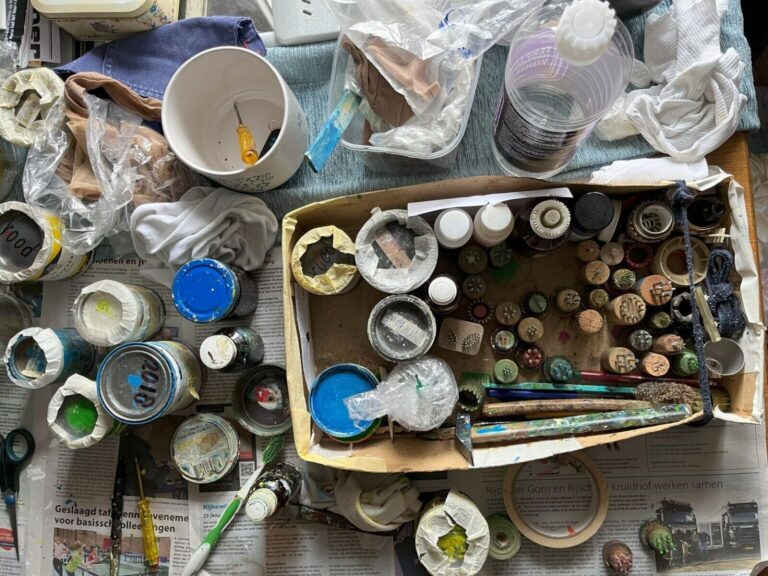
From ceramics to Staphorster dotwork: classic crafts are under pressure. Not only in the Netherlands, but throughout Europe, preserving their knowledge and existence is becoming increasingly challenging.
Despite efforts to include traditional crafts in the national list of intangible heritage, the question is: ’How can we avoid crafts and the specialist knowledge to fall into oblivion and at the same time ensure that practitioners, the craftspeople, can continue to thrive in an economy that places cost and mass production first, over local knowledge and material? Can technology play a role in bridging sustainable practices of the past with current ecological and economical challenges?
What elements of a craftmanship process can interact with modern technology while preserving agency of the crafstperson and respect of heritage and tradition? In this project, we seek a future-proof heritage approach that enriches crafts and makes them more resilient where possible, without losing the characteristic features of craftsmanship heritage.
Waag is both coordinator of the pilots in Tracks4crafts, as well as one of the pilots.
As a pilot coordinator Waag provides guidance and ensures that their work is aligned to the work of the other project partners.
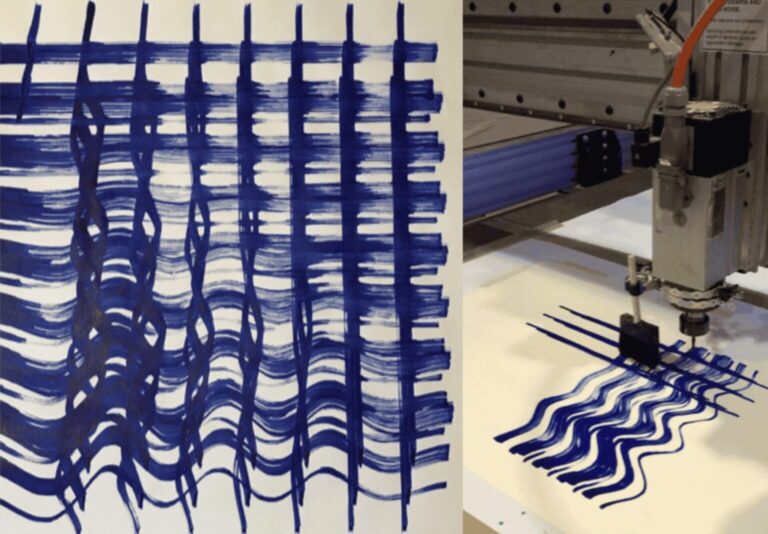
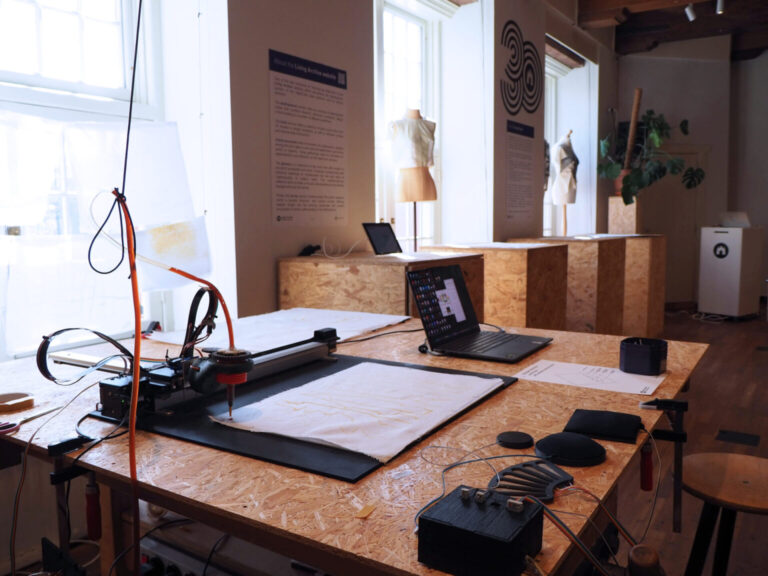
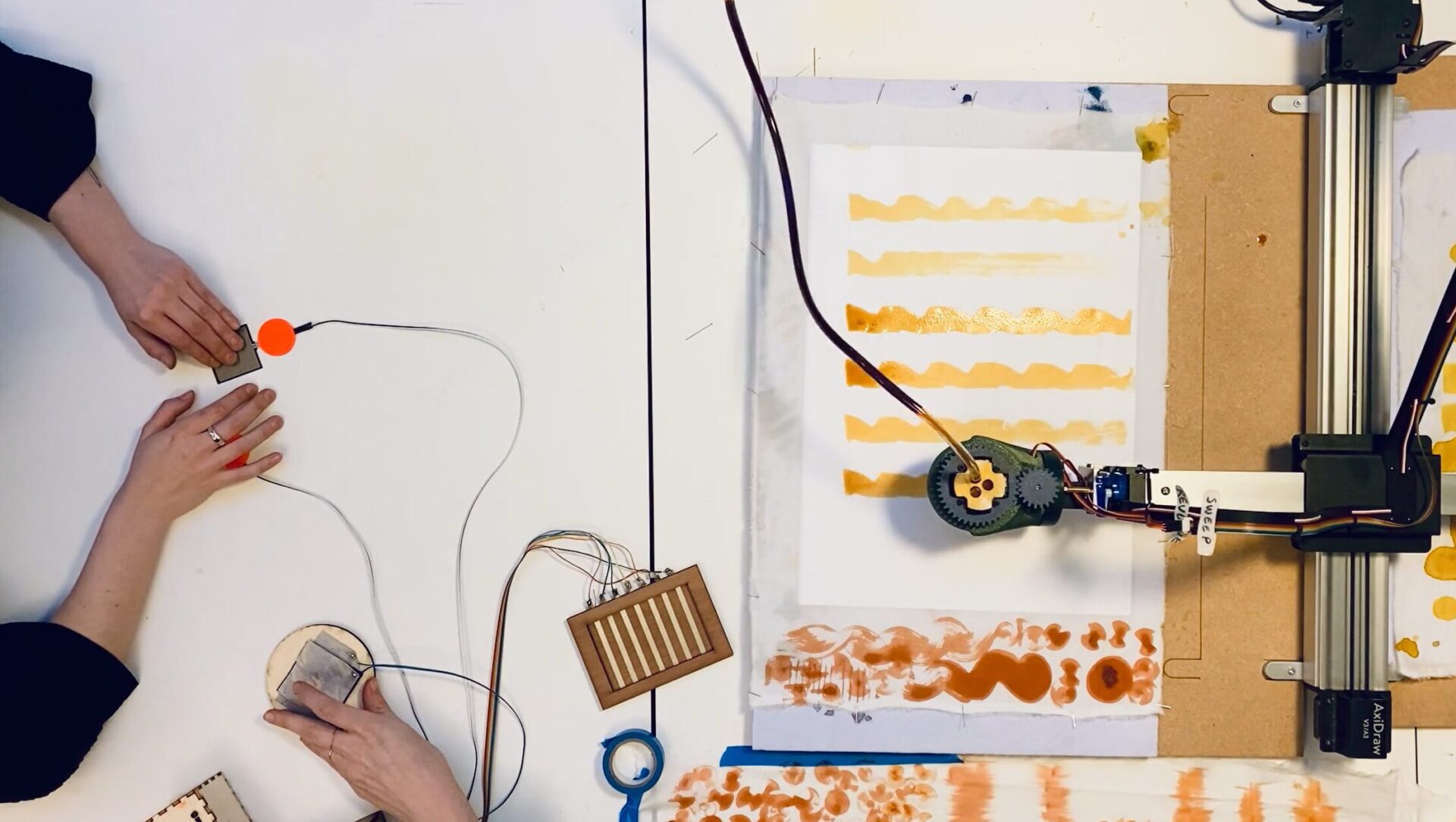
The pilot project “Hacking the Machines” investigates how digital fabrication equipment can be transformed into textile printers that use natural dyes and mordants. Conducted by Waag’s TextileLab Amsterdam, this research explores how machines can be hacked and guided through varying levels of interactive intervention by the craftsperson. It defines a hybrid craft that recognizes the power of both human and technology resulting in a craftsperson 2.0.
By bridging multiple types of technology, in a fully open-source fashion, Waag investigates the different roles technology can take in relation to craftsmanship processes. Where at first technology creates resistance and a gap between tradition and modernised practice, Waag explores all the routes for the technology to bridge these expertises back closer together – by reclaiming agency to craftsperson in a digital process.
The pilot’s focus is the development of an open‑source protocol that turns computer‑controlled CNC machines into digital textile printers, that use entirely bio-based and compostable inks. The technologies used transform the digital printing process into an interactive, touch‑responsive printing tool.
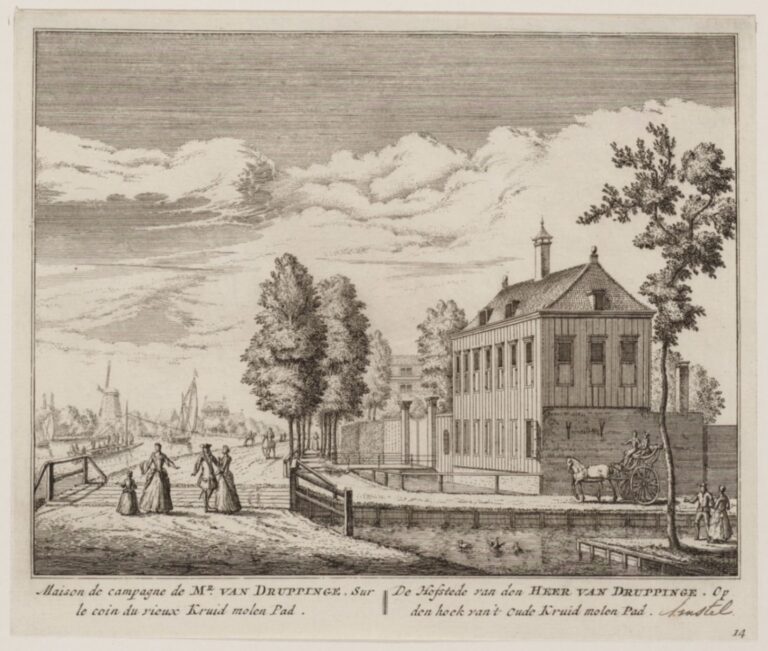
The pilot – drawing on the local historical connection to and use of block printing and natural dyes in the Netherlands – serves as a bridge for exploring technological alternatives and sustainable use of materials, addressing current environmental challenges in textile colouring and printing.
Using a ‘haptic intervention machine’ Waag aims to provide a sensory and intuitive creative live interaction between the craftsperson and the digitally controlled machine, critically exploring the gap between traditional hand-painting or printing on the one hand, and fully digitised alternatives on the other.