100% AMSTERDAM

urban grown fibers & dyes

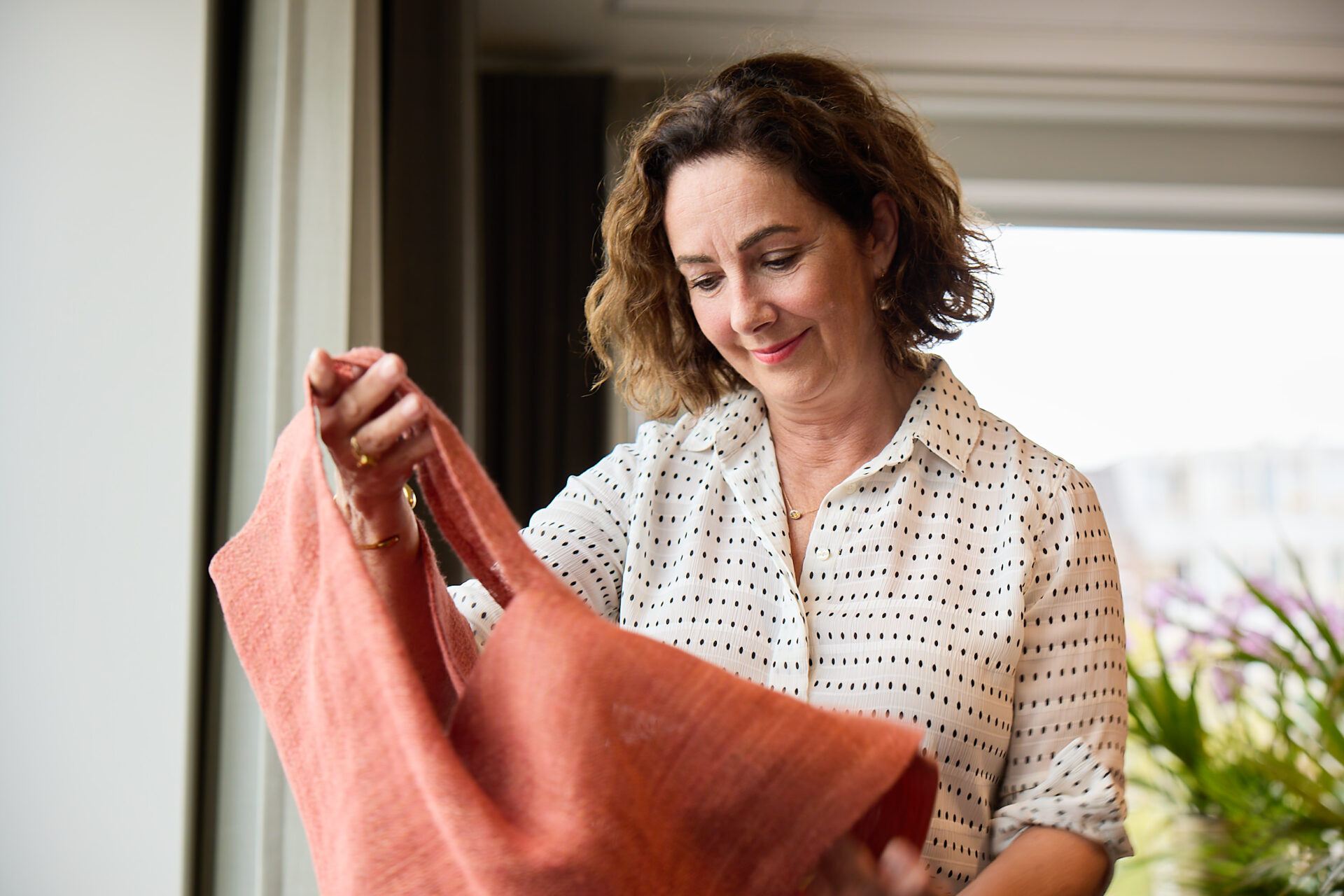
100% Amsterdam Textile creates an iconic garment for the mayor of Amsterdam as part of Amsterdam’s 750th anniversary.

In celebrating Amsterdam’s 750th anniversary, Waag Futurelab and The Linen Project joined forces to produce a 100% Amsterdam-made garment for the mayor of Amsterdam. Through this project, 100% Amsterdam Textiles aims to inspire and encourage new forms of business, reimagining how textiles, from fibre to design to clothing, can be produced within the city boundaries.

Drawing from the city’s deep textile heritage and present modern craftsmanship, new value chains can emerge based on sustainability and circularity. The flax and natural dyes are cultivated and processed within the city borders, fostering collaboration with local partners. Both Waag and The Linen Project, partners in this project, believe in alternative value chains in which circular makers’ communities are activated. Together, they are demonstrating that alternative, sustainable value chains guided by ‘doughnut economy’ principles are possible.

100% AMSTERDAM is about building cultures of care, understanding the ecosystems we already inhabit and renewing our relationship with urban environments.
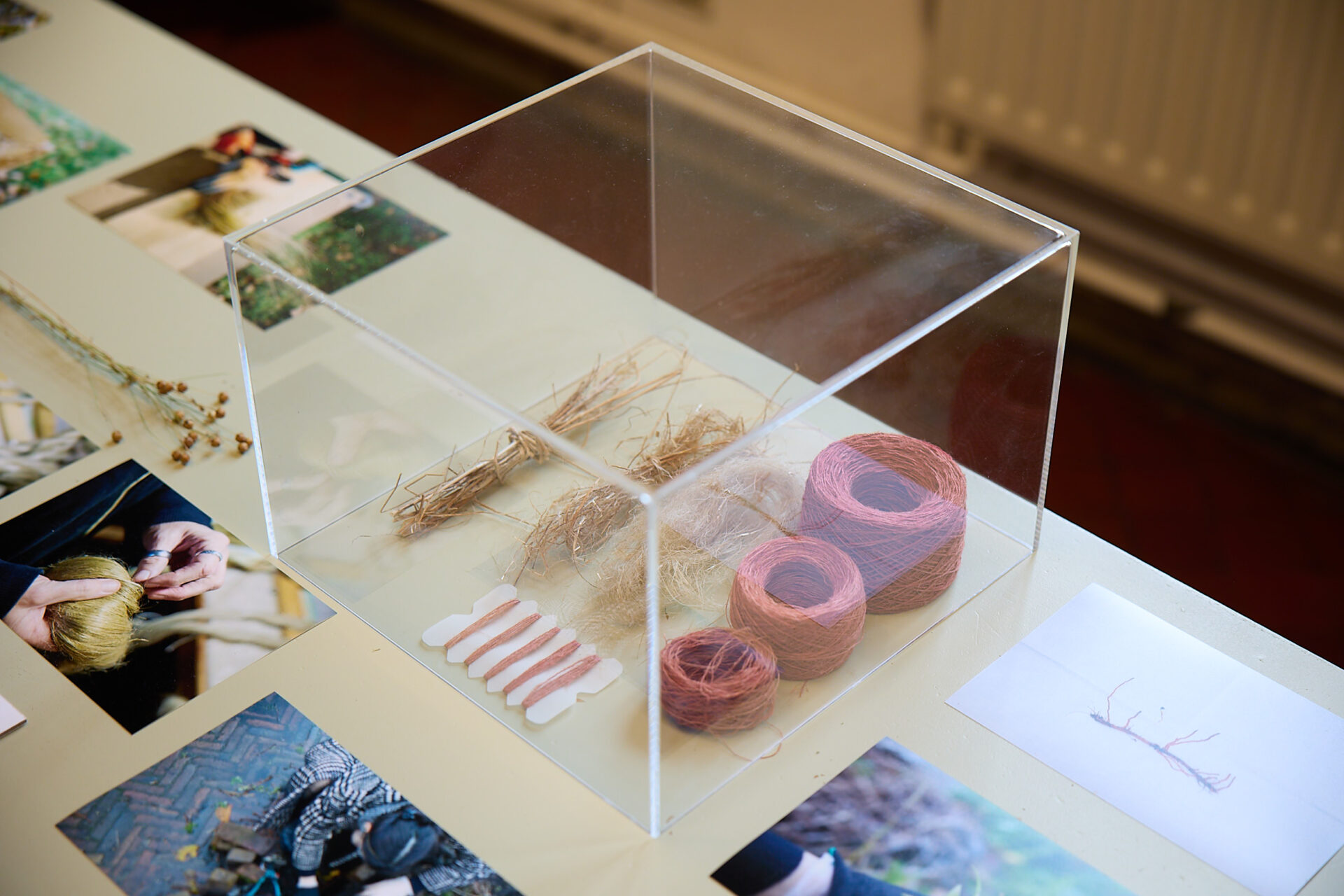
Textile from urban sources

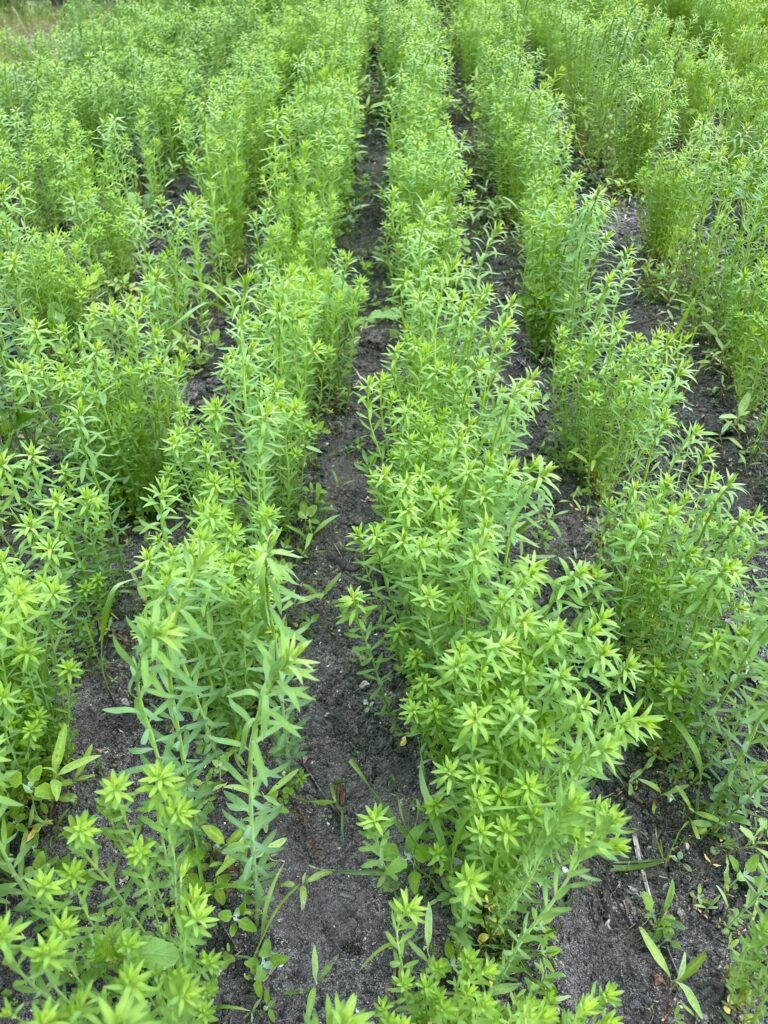
The cultivation of the natural materials, dyeing and the design into clothing: the textiles for this garment were completely produced within the city limits.  Departing from 4 parking spots, transforming these into urban gardens and regenerating the soil and soul of those areas.

The collaboration draws on Amsterdam’s rich textile history, remembered in street names like Verversstraat, Staalstraat and Raamgracht, and departs from the idea that craft knowledge is essential to address contemporary sustainability issues. With only 25m² of flax, the process from seed to garment leaned heavily on the expertise and knowledge of the makers. Unfortunately, it is this knowledge and skill that is often lost because of production optimisation in the textile industry.

100% Amsterdam textile is an ode to the maker culture based on circular economic principles and celebrates the craft and these makers with their attention, care and love for the material.

Concept, coordination & realisation — Waag Futurelab: Cecilia Raspanti, Isabel Berentzen; The Linen Project: Guusje Heesakkers, Joan den Exter, Willemien Ippel

Flax growing, harvesting — G. Heesakkers
Flax processing — expert Marieke van Mieghem; guiding C. Raspanti, I. Berentzen, I. Boszhard, M. Smith, J. den Exter, W. Ippel
Dyes growing & harvesting — C. Raspanti, I. Berentzen

Spinning — Erna Evers, Geeskegrietje van Dijk, Heleen Lorijn 
Dyeing — C. Raspanti, A. Civalleri
Weaving — Eva Klee 
Garment design & confection — Charlotte Bakkenes 

Photography — Wardie Hellendoorn

From seed to garment

Flax growing and processing

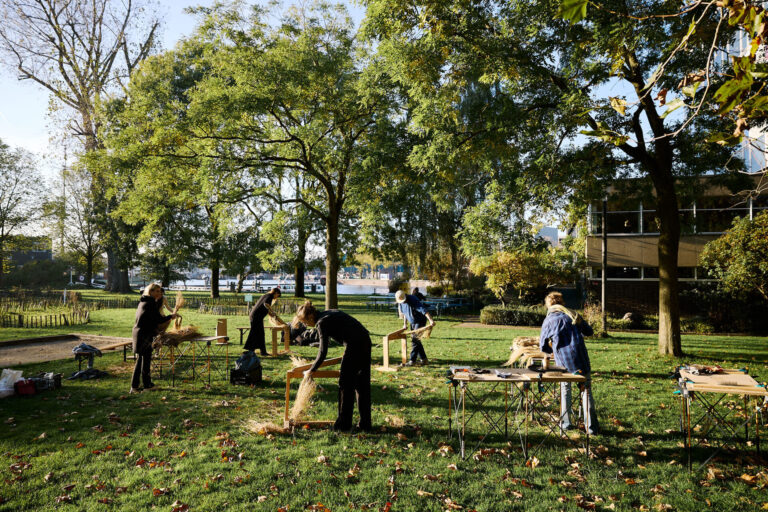
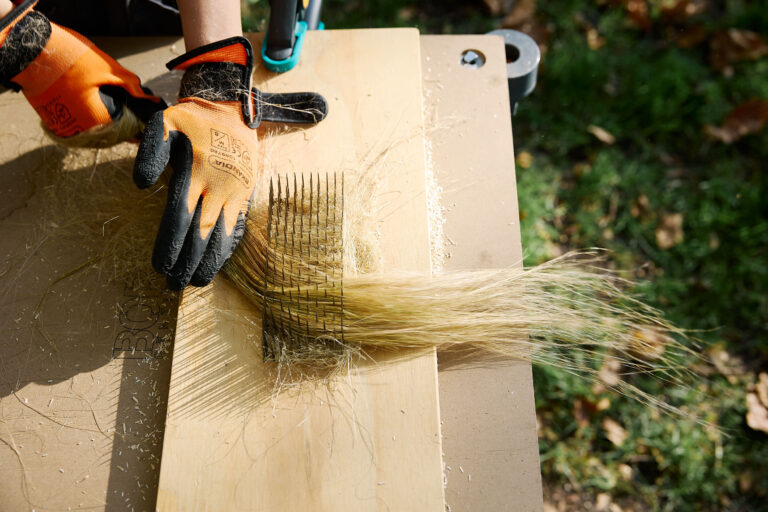
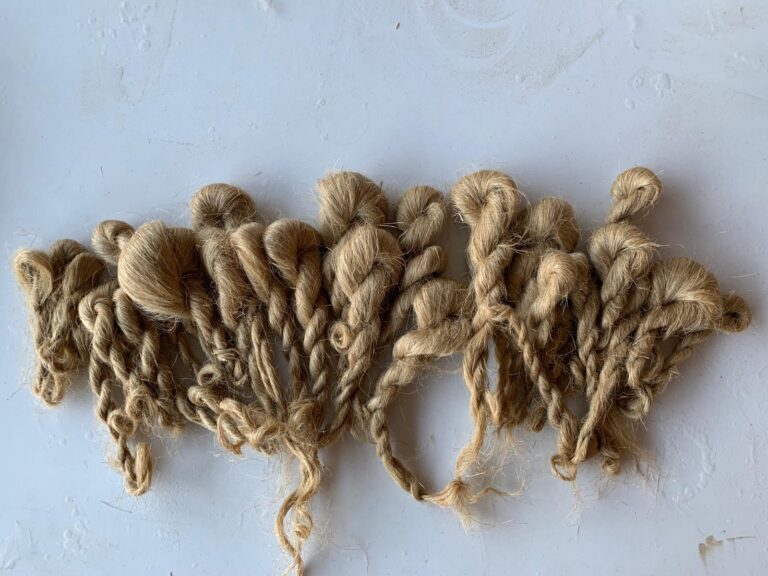
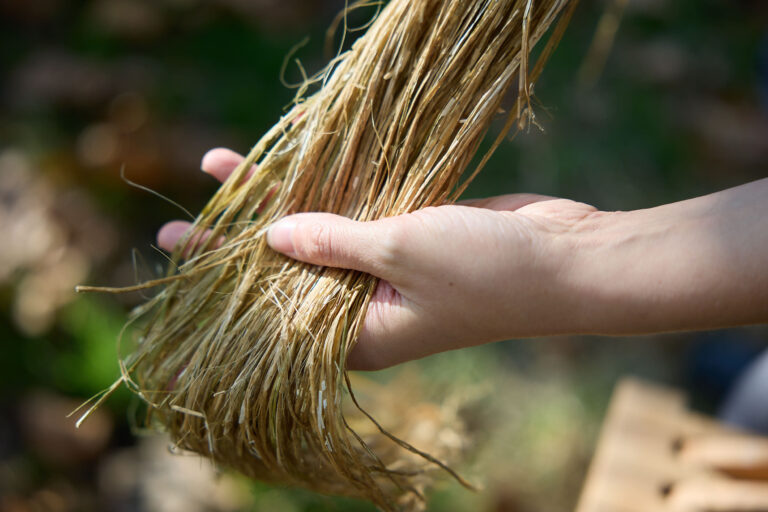
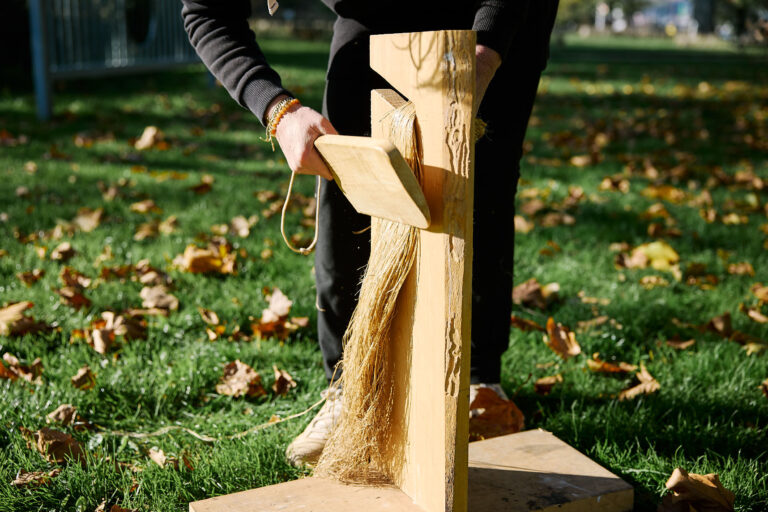
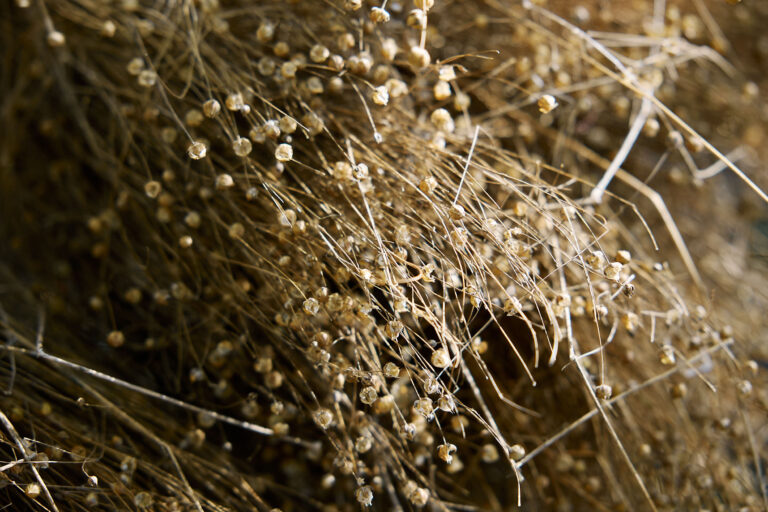
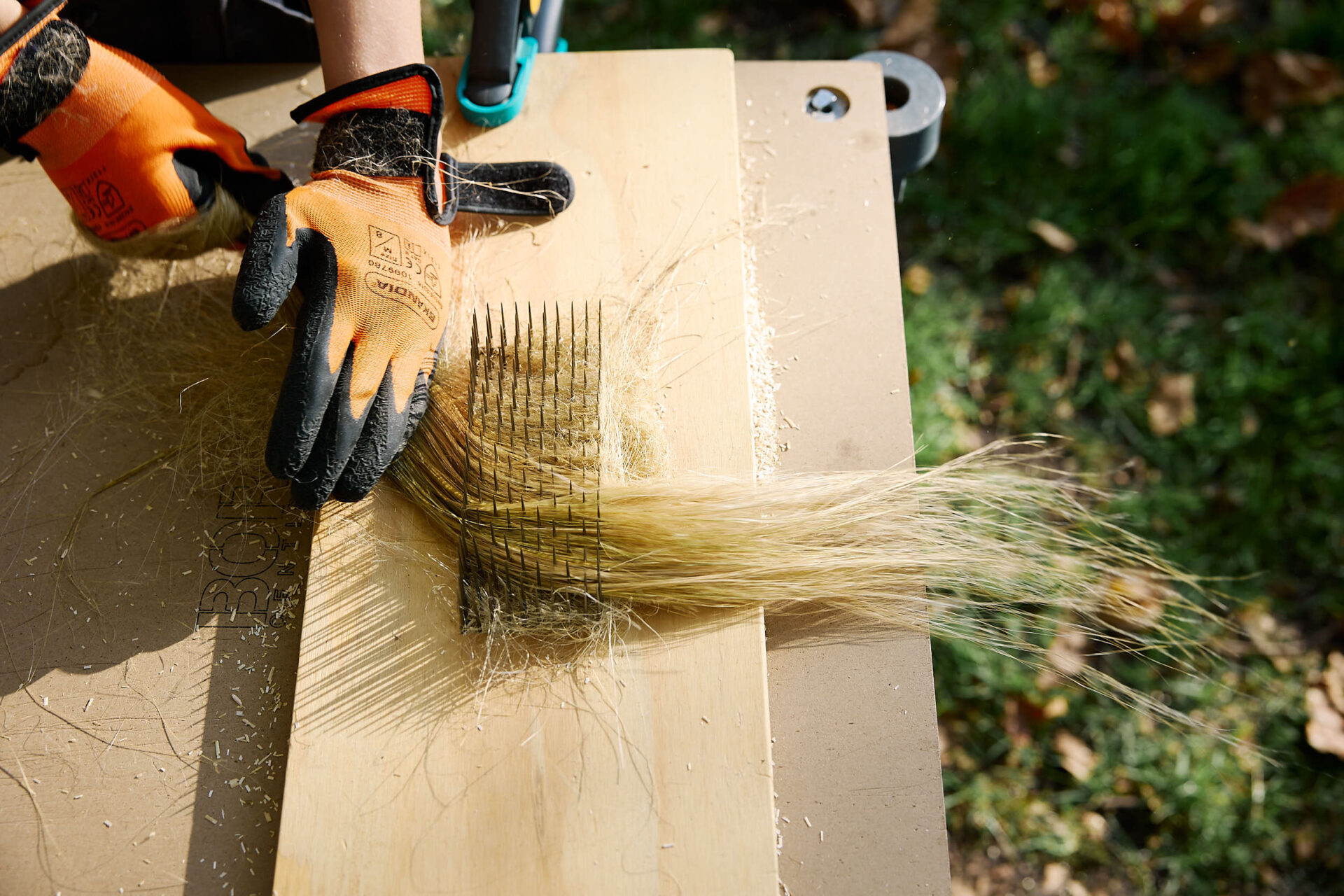
Flax processing is a complex process that formed the basis of the Dutch textile industry for centuries. On a 25m² plot at the Marineterrein, the flax was sown, grown and harvested after which it was pulled by hand. This traditional method ensures longer fibres of better quality. After retting where the flax stalks are exposed to moisture to break down the pectin that binds the fibres together, the flax was laid out to dry in the Commandant's House at the Marineterrein. The process of breaking, scutching and hackling transforms the raw flax plant into workable fibres separating it from the woody constituents. Each step within flax processing determines the final quality of the fibres. The flax is then sorted by length and twisted into flax pods before spinning can take place.

Dye growing and processing

On another 25m² plot at the Marineterrein, the dyes were sown, grown and harvested over multiple years.
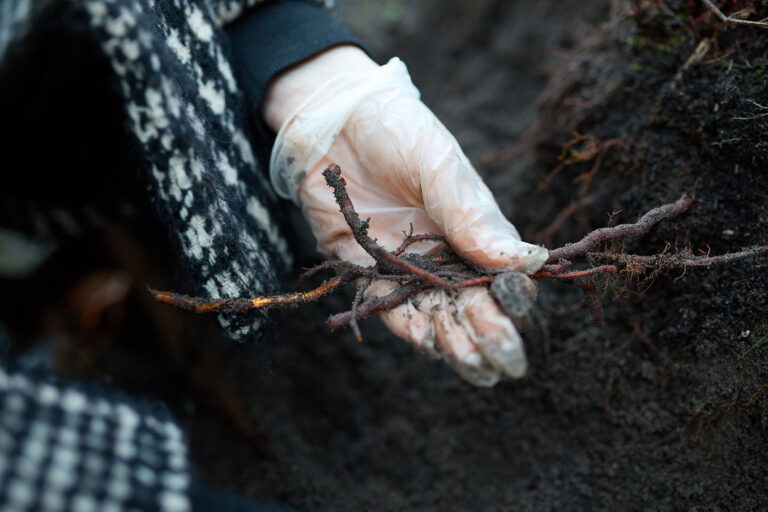
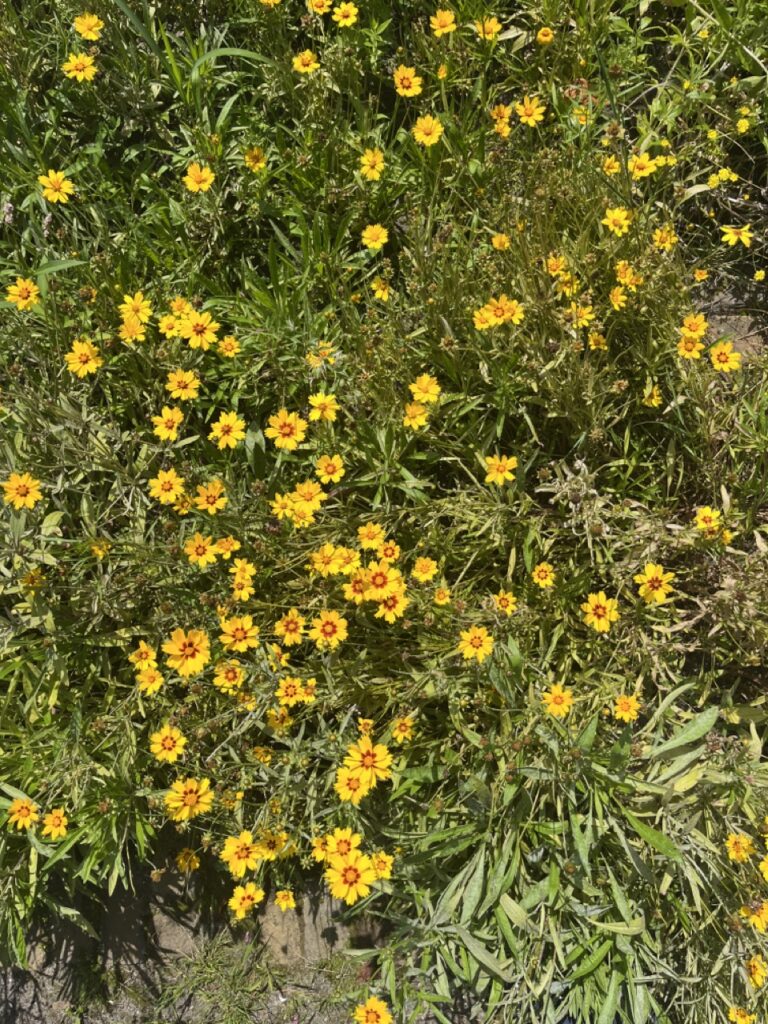
The main dye plants grown and harvested for the garment are crops or 3-year old Madder or Meekrap (Rubia Tinctoria), dried and steamed in the lab before extraction, alongside with Coreopsis flowers, also called Meisjesogen (Coreopsis Tinctoria).
Information on both plants can be found on the plants catalogue and on the dye garden overview, by following the links below

Spinning

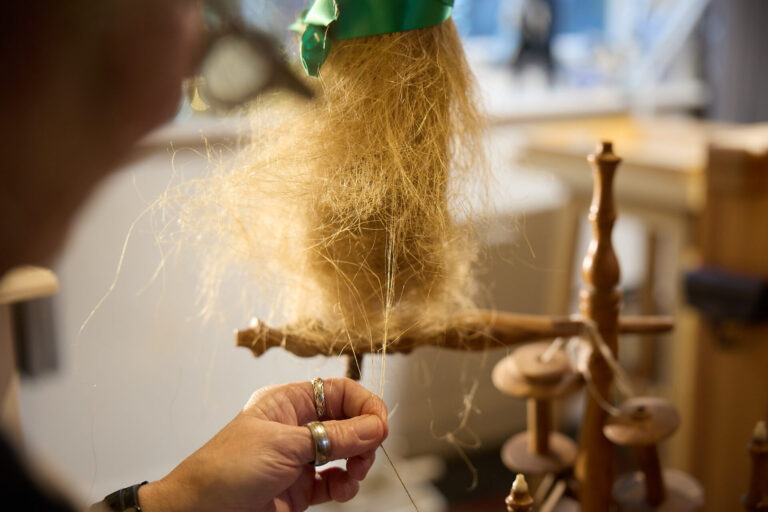
Flax spinning is an extremely difficult craft and requires knowledge that has been lost over the years in Amsterdam. For spinning the fibres, an outreach was needed to the north and east of the Netherlands to find experienced spinners who still mastered this craft. The expertise shows how fragile craft knowledge is and how important it is to nurture and pass on these skills. The hackled flax fibres are first carefully further sorted by length, after which a spinning stick is made before the actual spinning process starts. The spinning process requires not only technical skill but also a deep understanding of the properties of the flax fibres, with each spinner developing their own rhythm and technique to spin the yarn.

Dyeing

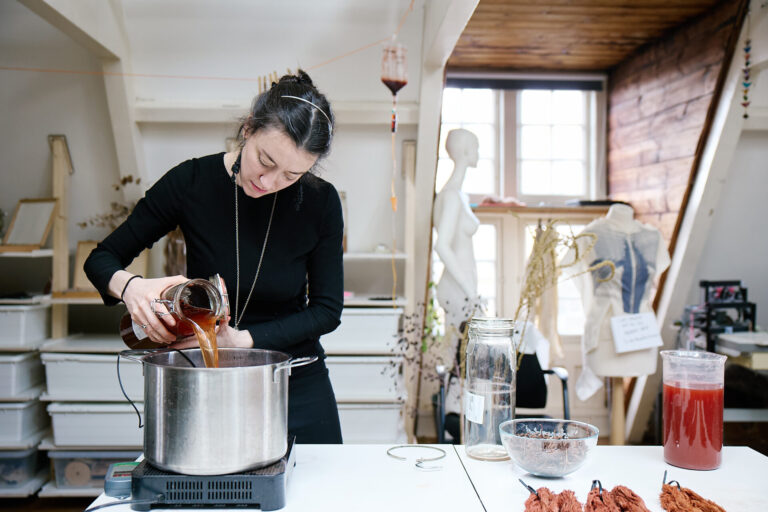
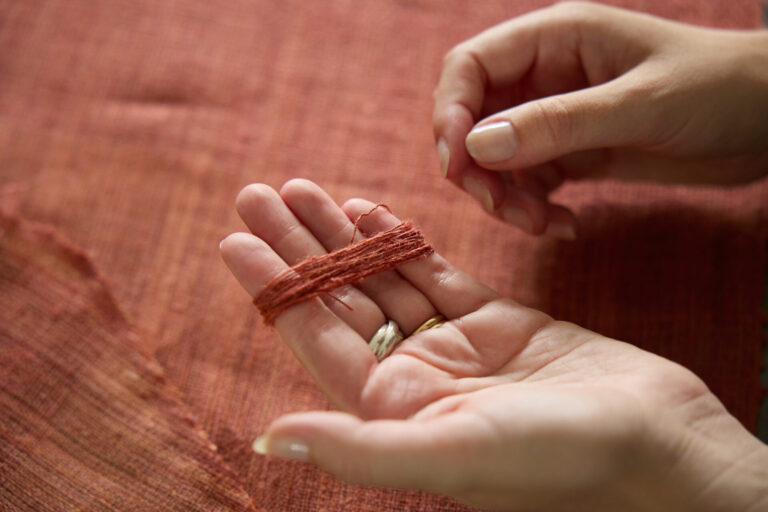
To dye the yarns, three-year-old madder was harvested at the Marineterrein. Natural dyeing is a process with many dependencies and possibilities where the chemistry between material and dye bath is continuously balanced by the dyer for optimal results. Depending on twist and fibre quality, each yarn absorbs the dye differently and thus requires specific tuning during the dyeing process. The roots of madder have been used for the red colour. Madder contains dozens of different chromatic components, which emerge in different lights depending on how it's been dyed. This variety of colour tones gives the yarn and textiles a unique depth and vibrancy that is impossible to replicate with industrial dyes. In addition to madder, coreopsis was also used to create a warmer colour palette.

Weaving

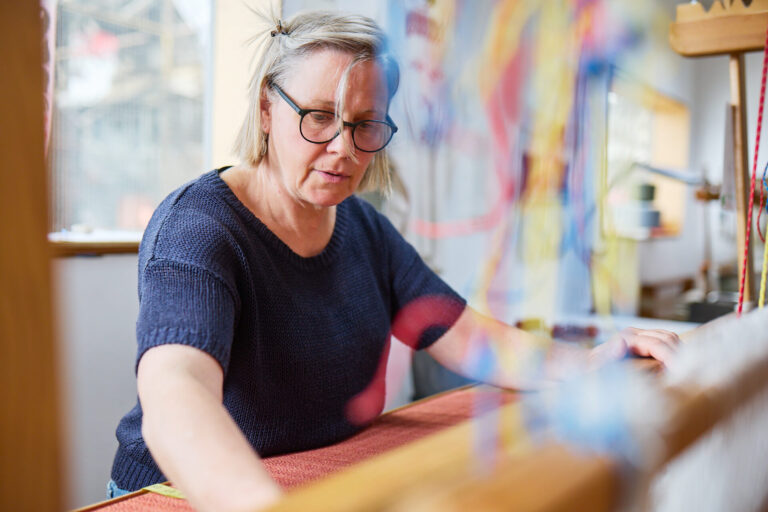
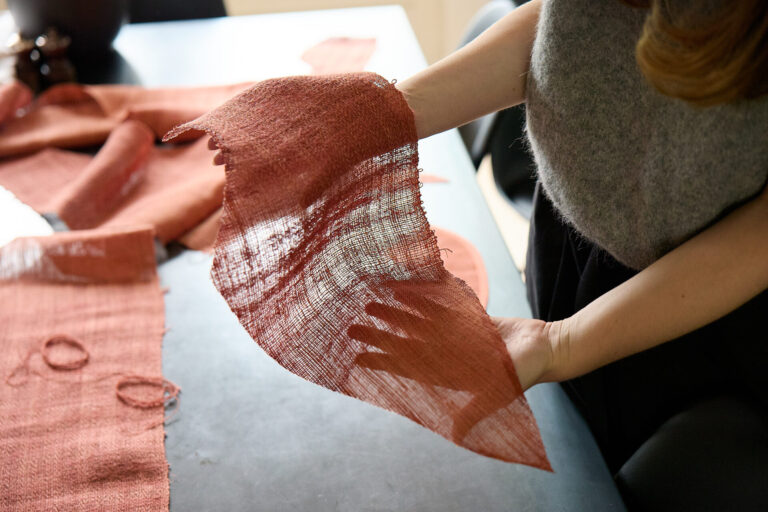
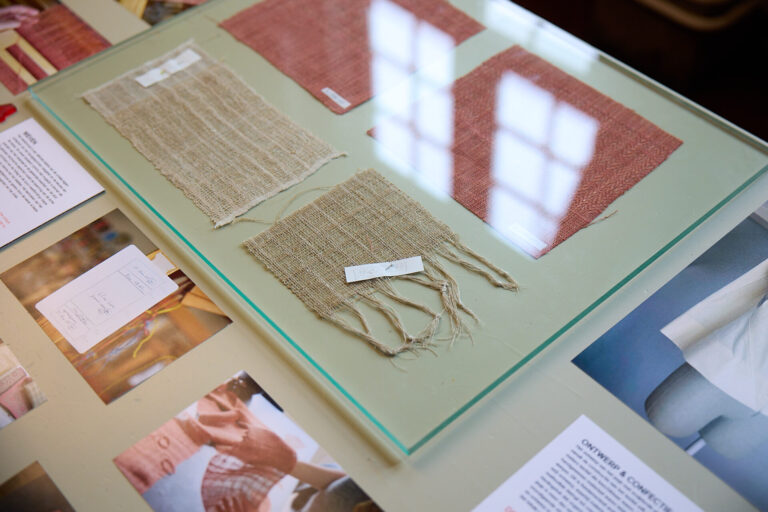
The weave of the fabric is completely tailored to the final garment design and the properties of the yarns. For which the weaver makes continuous calculations of what is possible within the limits of the material and the desired quality of the fabric. The weaving process is a delicate balance in which the unique properties of the hand-spun flax yarns are optimally utilised in a fabric. The chosen technical aspects, such as the tension of the warp, the density of the weft and the type of weave-binding, define the texture and strength. The weaver's sensibility of the right rhythm between loom and yarns determines the final quality of the fabric.

Design & confection

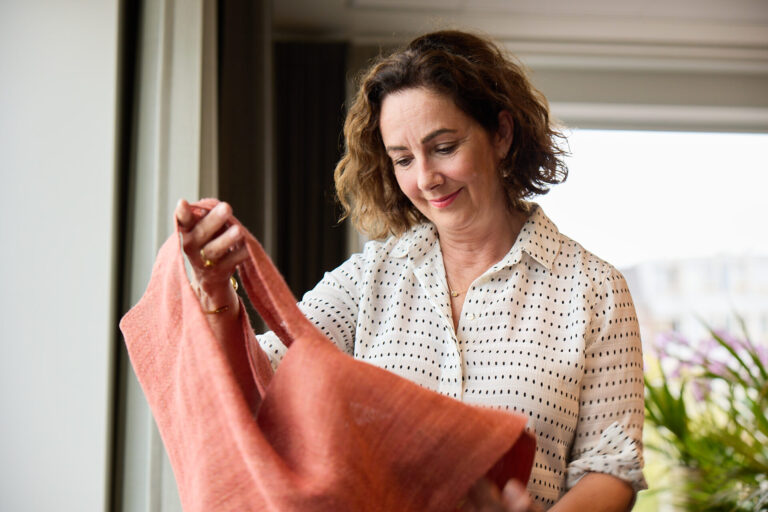
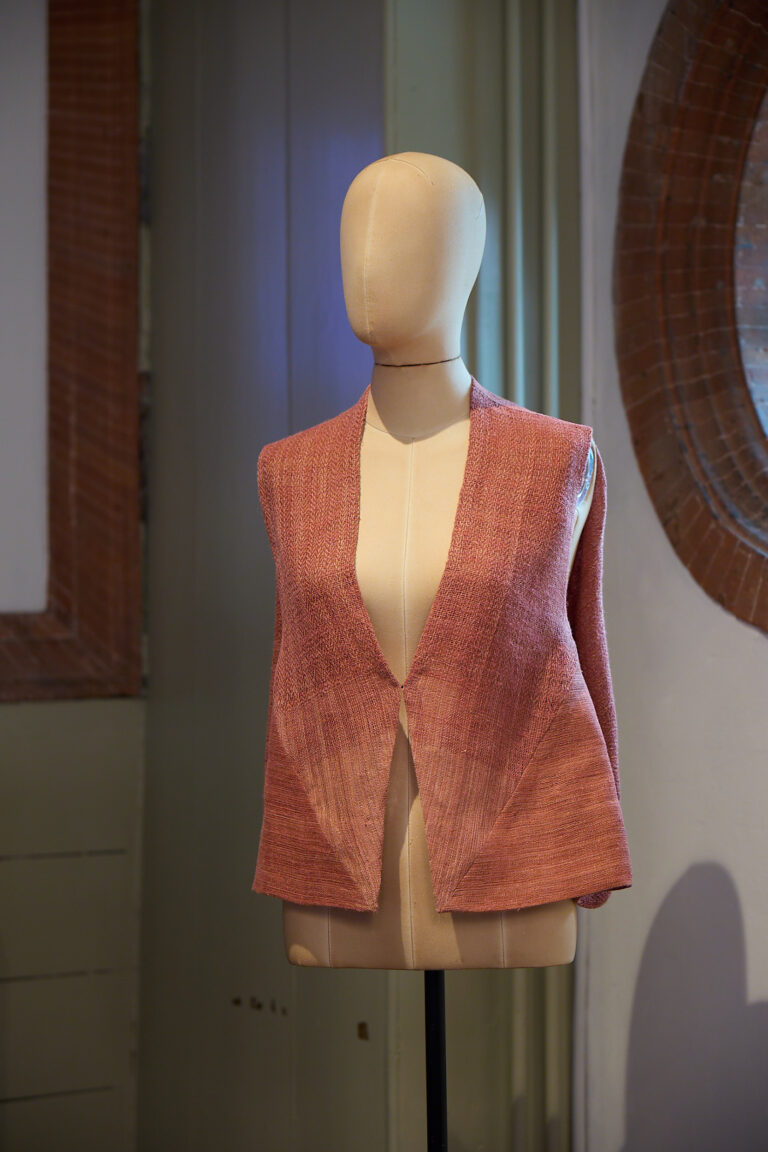
The jacket's design is entirely dependent on the amount of metres of textile available, an approach fundamentally different from conventional design where material is secondary to form. The jacket with sculptural pleat is developed from the construction of the textile itself, with the properties of the hand-woven material guiding the designer's process. This methodology requires creative solutions and results in a garment that flows organically from the production process. The jacket is more than a garment; it is a manifestation of all the preceding steps, from flax growing to weaving. By bringing material and design into dialogue, the designer has designed a garment that embodies local production and craftsmanship.

Many thanks to all the hands that helped: 


Waag Futurelab: Cecilia Raspanti (dyeing), Isabel Berentzen, Anna Civallieri, Ista Boszhard, Maarten Smith 

The Linen Project: Willemien Ippel, Joan den Exter, Guusje Heesakkers

Linen steward & expert: Marieke van Mieghem; 

Spinning: Erna Evers, Heleen Lorijn, Geeskegrietje van Dijk; 

Weaving: Eva Klee; 

Design and confection: Charlotte Bakkenes; 

Photography: Wardie Hellendoorn

This project was made possible thanks to financial support from:

The Municipality of Amsterdam, Iona Stichting and Het Cultuurfonds