The Local Color Garden

at Marineterrein

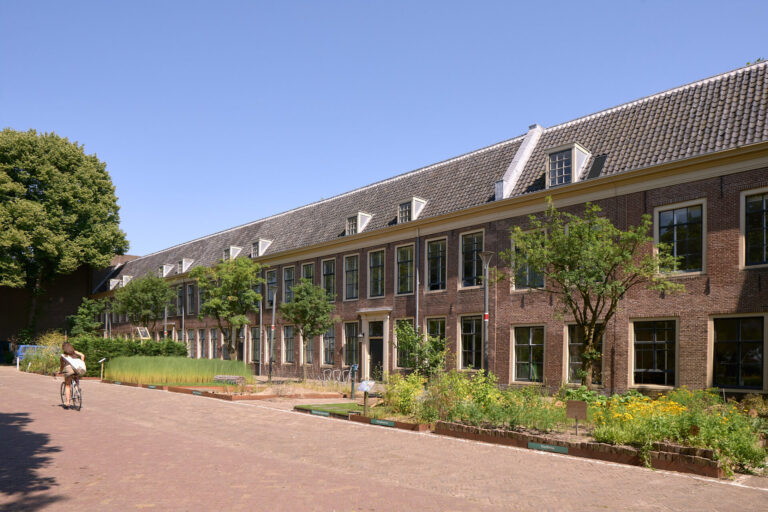
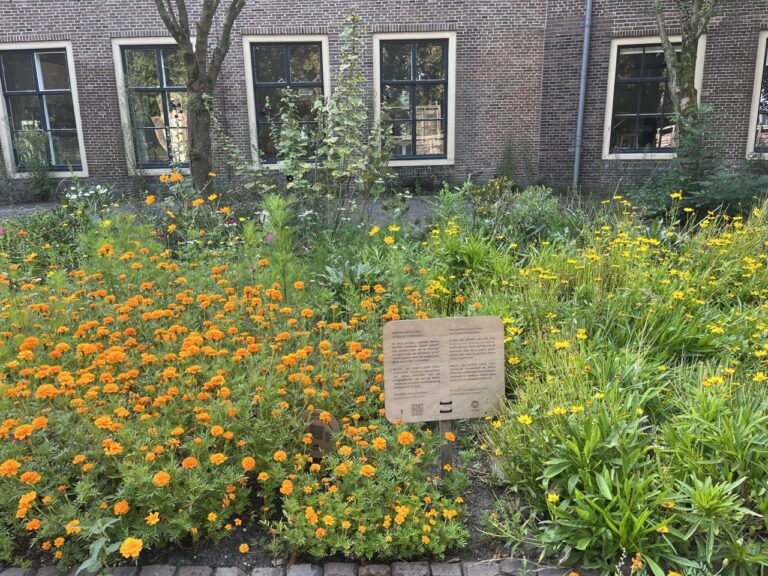
The Local Color Garden is located at Marineterrein in the city centre of Amsterdam. Marineterrein serves as a place for experimentation and collaboration to research and understand how the city can adapt to a fast-changing world. One of their experimentation pilots is ‘ParkxPark’, which explores what opportunities arise when 10.000 parking spots are removed throughout the city. Driven by the need to create more space for bike lanes, sidewalks and greenery Amsterdam will continue doing so in 2025. 

To understand what’s possible ‘ParkxPark’ held an open call for creative ideas to repurpose these urban spaces.  Ten local makers, institutes, designers, and citizens were chosen to develop their green oases at Marineterrein – including the Local Color Garden – now in its second year.

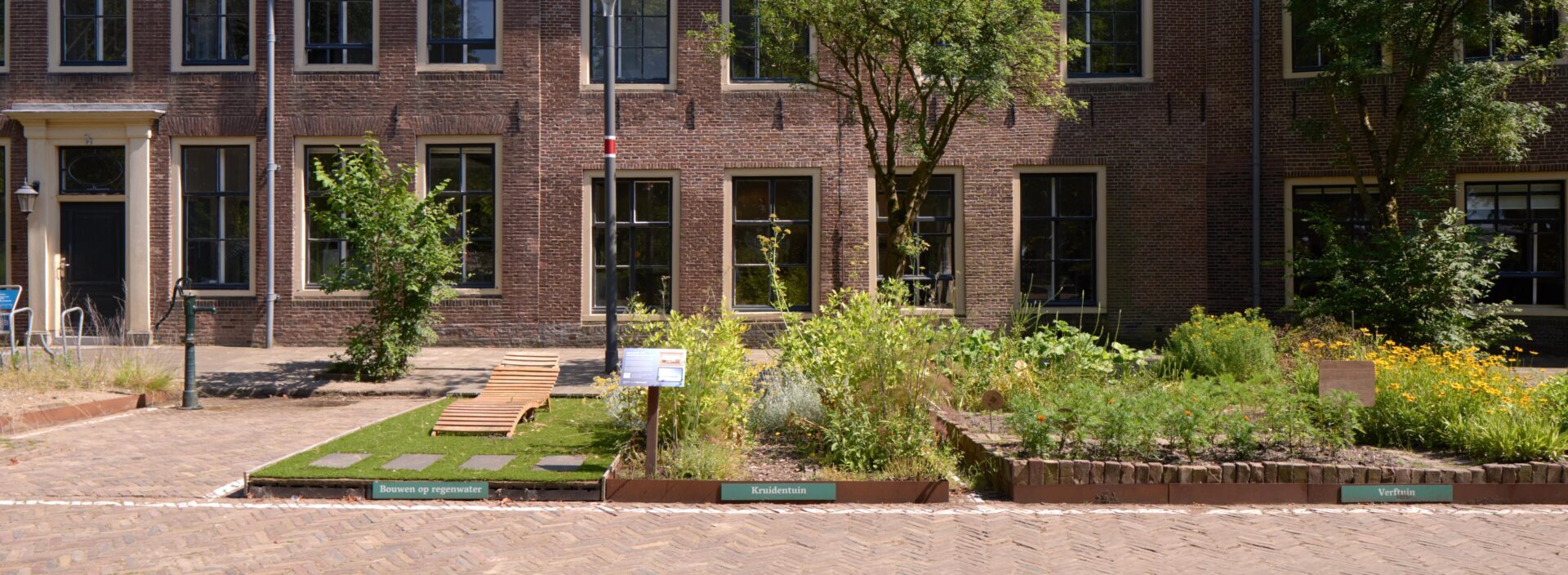
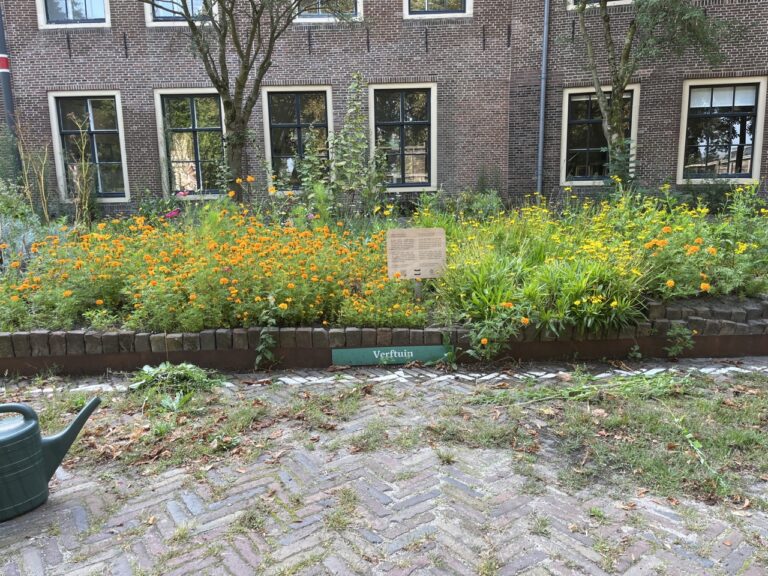
Covering 25 square meters, the Local Color Garden at Marineterrein is publicly accessible and plays a great role in the project’s research efforts. It serves as a living laboratory where field research and data collection on the cultivation of biochromes in an urban context take place. Dye plants are grown, harvested, and used as dye matter in the dye experiments in the lab. More importantly, the garden provides the opportunity to test the concept of urban resource production with its target audience, offering valuable insights into public perceptions and reactions to growing biochromes within the city. Observations, experiences, and other findings from the Local Color Garden are documented in field reports.
 

Video interview about the Local Color Garden for ‘Verhalen van het Marineterrein’ – Marineterrein

Growing a Garden

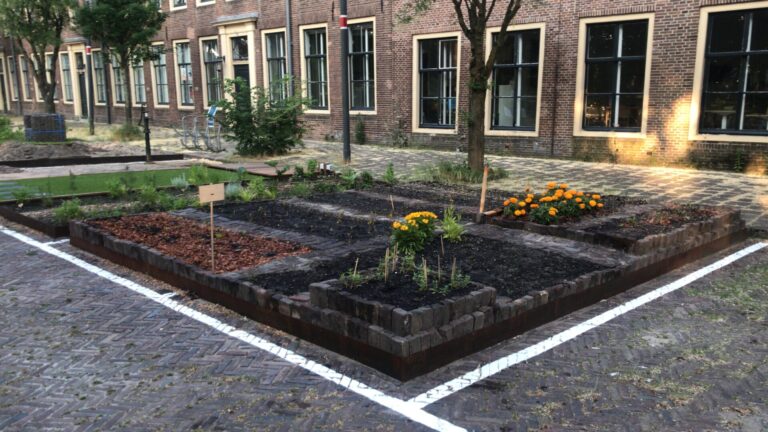
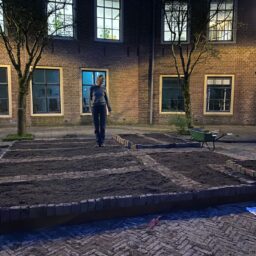
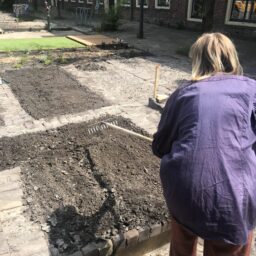
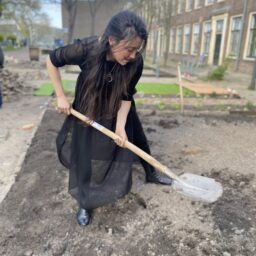
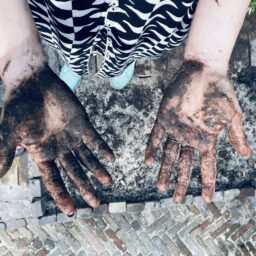
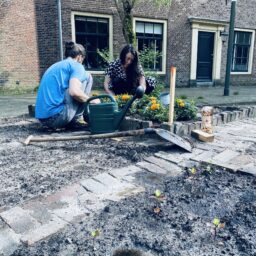
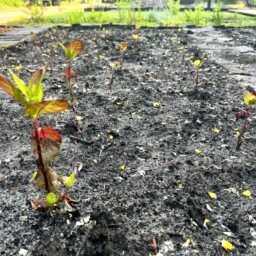
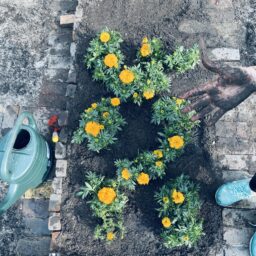
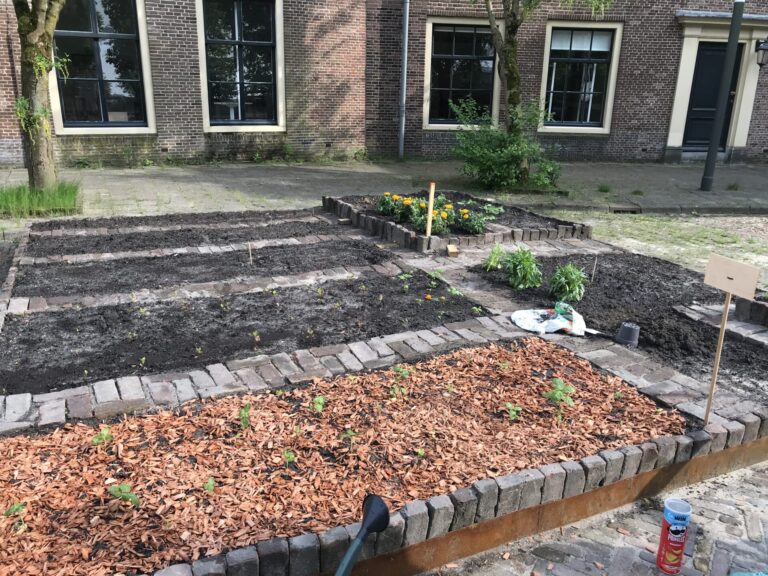
On April 20th 2023, we started growing our pilot garden of the Local Color project at the Marineterrein. This garden functions as a living research space, where color, ecology, and care intersect.

Throughout the project, we tended to the biochrome-producing plants cultivated here. Weekly observations allowed us to closely monitor their development and adjust our care strategies when necessary. These ongoing interactions emphasized responsiveness over control, acknowledging growth as a collaborative process rather than a fixed outcome.

The garden fosters a deeper connection to natural urban systems through a symbiotic relationship: we support the plants’ growth by providing appropriate conditions, and in return, they offer the potential for creating locally sourced dye matter. In this exchange, the garden becomes both a material source and a site of learning.

Photocredit: Melchior Overdevest

Design of the Garden

The garden was designed as a chromatic system. Our aim was to cultivate plants representing the primary colors, enabling the creation of a broad spectrum of hues through natural dyeing processes. In addition, we included several species associated with secondary colors to extend the palette and explore nuanced tonal relationships.

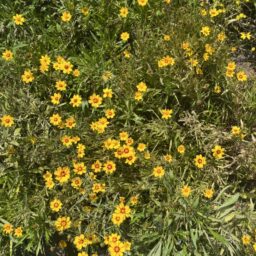
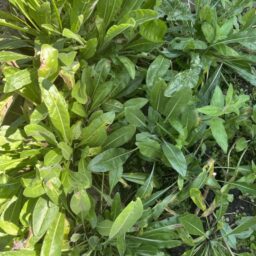
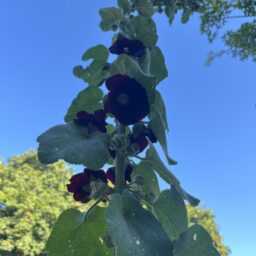
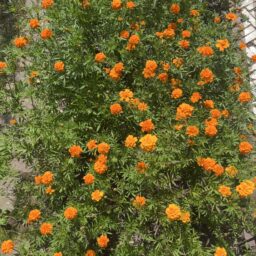
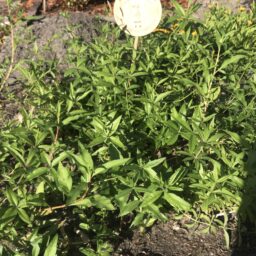
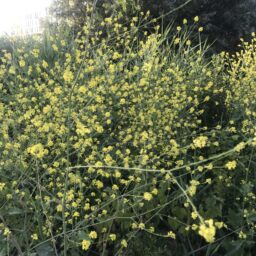
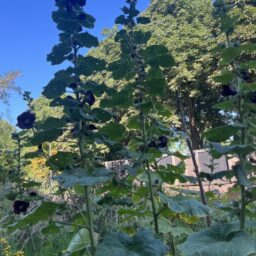
The planting plan reflects this approach. Madder was selected as the source for red. Yellow tones are represented by coreopsis, weld, St. John’s wort, and marigold. For blue, we cultivated Japanese indigo and woad. Hollyhock was planted to introduce purple hues. Together, these plants form a living color map, rooted in both botanical diversity and dye potential.

Garden signs were produced to inform passing visitors about the dye garden, the ambition of Local Color and information on the dye plants that are growing there.

A list of the plants in the garden at Marineterrein:

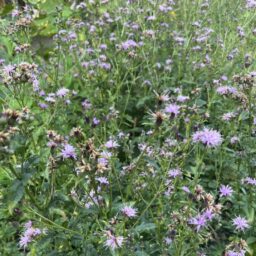
In 2023 the garden accommodated: madder, coreopsis,  Japanese indigo, weld, chocolate cosmos, hollyhock, marigold, saint johns wort, woad and sulfur cosmos.


The garden in spring 2023

The Rehabilitation Garden

In July that first year we established a second garden as part of the Local Color project at one of Waag Futurelab’s locations: Huis De Pinto. This site became a dedicated home for a selection of our Japanese indigo plants.

During the growing season at the Marineterrein, we observed that several of the Japanese indigo plants were not developing as expected. Despite adding extra nitrogen—an essential nutrient for their growth—the plants continued to show signs of stress. Rather than further intervening at the original site, we chose to relocate part of the crop to a more sheltered environment.

Situated within the small and tranquil courtyard of Huis De Pinto, the garden provides a favorable microclimate. The plants receive abundant sunlight while being protected from strong winds, creating stable conditions that support recovery. Japanese indigo, in particular, thrives under these balanced circumstances.

Plants that appeared most vulnerable were moved to this space to regain strength. In this way, the garden became a place of care and restoration. We refer to it as our rehabilitation garden.

The start of 2024 was relatively wet, followed by a warm and sunny summer. Together, these conditions created a generally favourable environment for the garden and supported strong growth throughout the season.

Over time, the soil showed clear improvement. What had previously been dense and compacted became increasingly active and alive, with a growing presence of worms and other insects. This indicates better soil structure and nutrient availability.

Woad was harvested early in the year. The plants began flowering already in April, making early harvesting necessary to retain their dye potential before energy shifted toward seed production.

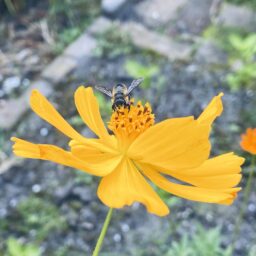
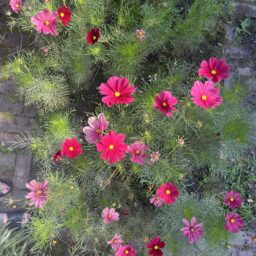
Japanese indigo was not actively cultivated in 2024. Instead, we allowed self-sprouting plants to emerge and grow where conditions suited them. The two beds were used to grow more marigolds and cosmos. Cosmos and marigolds thrived under the warm summer conditions, producing a large number of flowers and becoming an important attraction for insects and people passing by. 

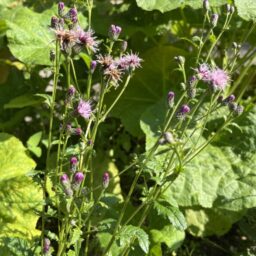
Sawwort performed notably well this season, likely benefiting from the nutrient uptake and soil amendments of the previous year.

Madder was harvested during the winter months, creating space for new plantings and allowing the soil to reset ahead of the next growing cycle.

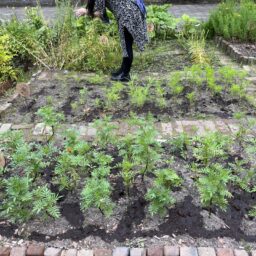
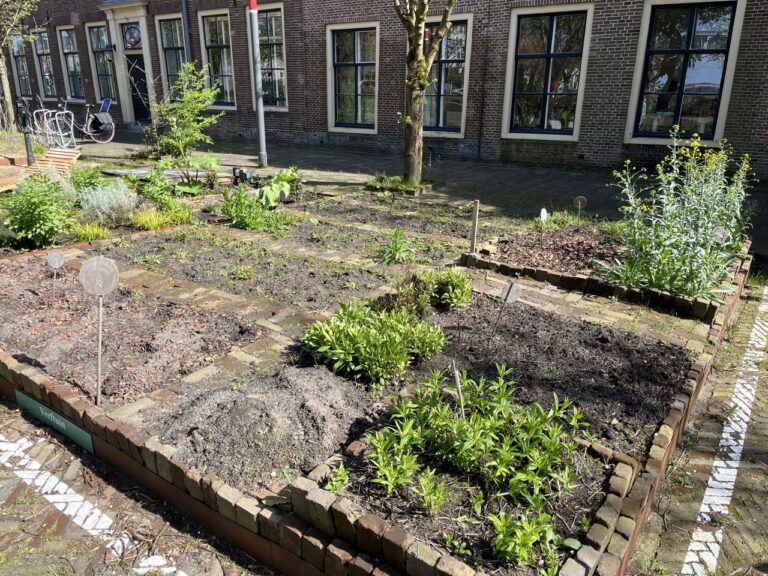
The garden beginning of spring 2024
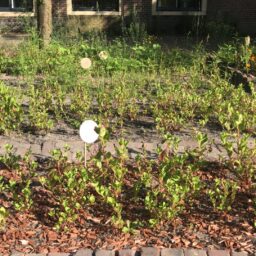
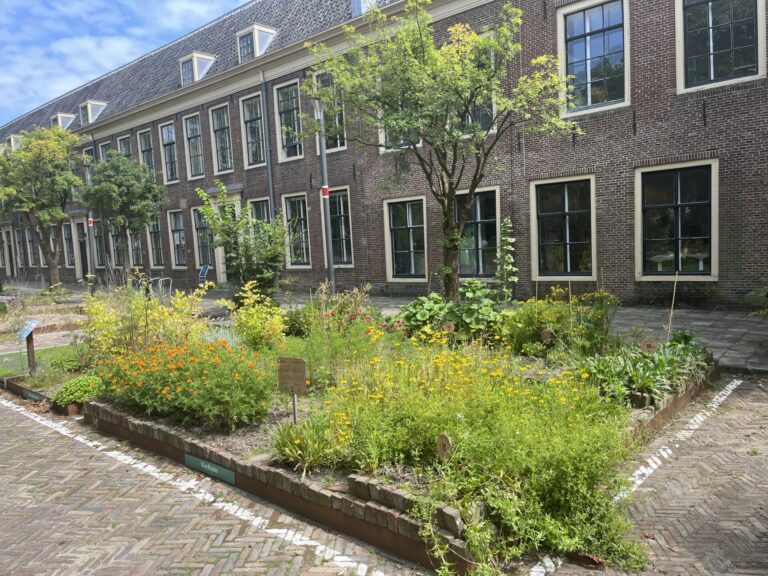
The garden the end of summer 2024


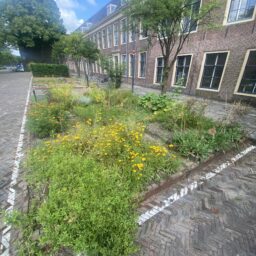
The garden summer 2025

2025 was characterised by periods of rainfall alternating with long stretches of sunshine. This pattern kept maintenance efforts, particularly watering, relatively low.

These conditions proved especially favourable for growing flowers, resulting in a strong and abundant flower harvest. Hollyhock thrived under the alternating rain and sun, growing nice and tall. The garden seemed like one big flower bomb.

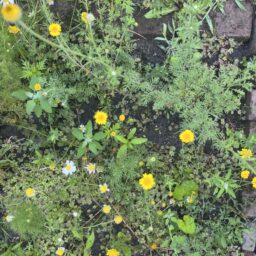
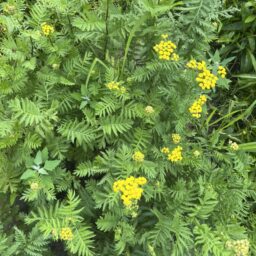
We expanded the garden with tansy, yarrow, and dyer’s chamomile, increasing the diversity in plants. While tansy and dyer’s chamomile established well, yarrow showed more limited growth. This slower development might be part of its natural establishment process. In general, the two-year and perennial plants in the garden showed significant improvement over time, indicating that longer growth cycles and increased soil quality play an important role. Like humans, plants also need some time to settle.