Chromatic relations

Ecologies of Local Color

Color is all around us.


While much of it seems visible, most of it is hidden.

Plants, food waste, bacteria, insects, soils and minerals, or algae, mosses and lichens – all are abundant with color that can be released as dyes, pigments and inks.


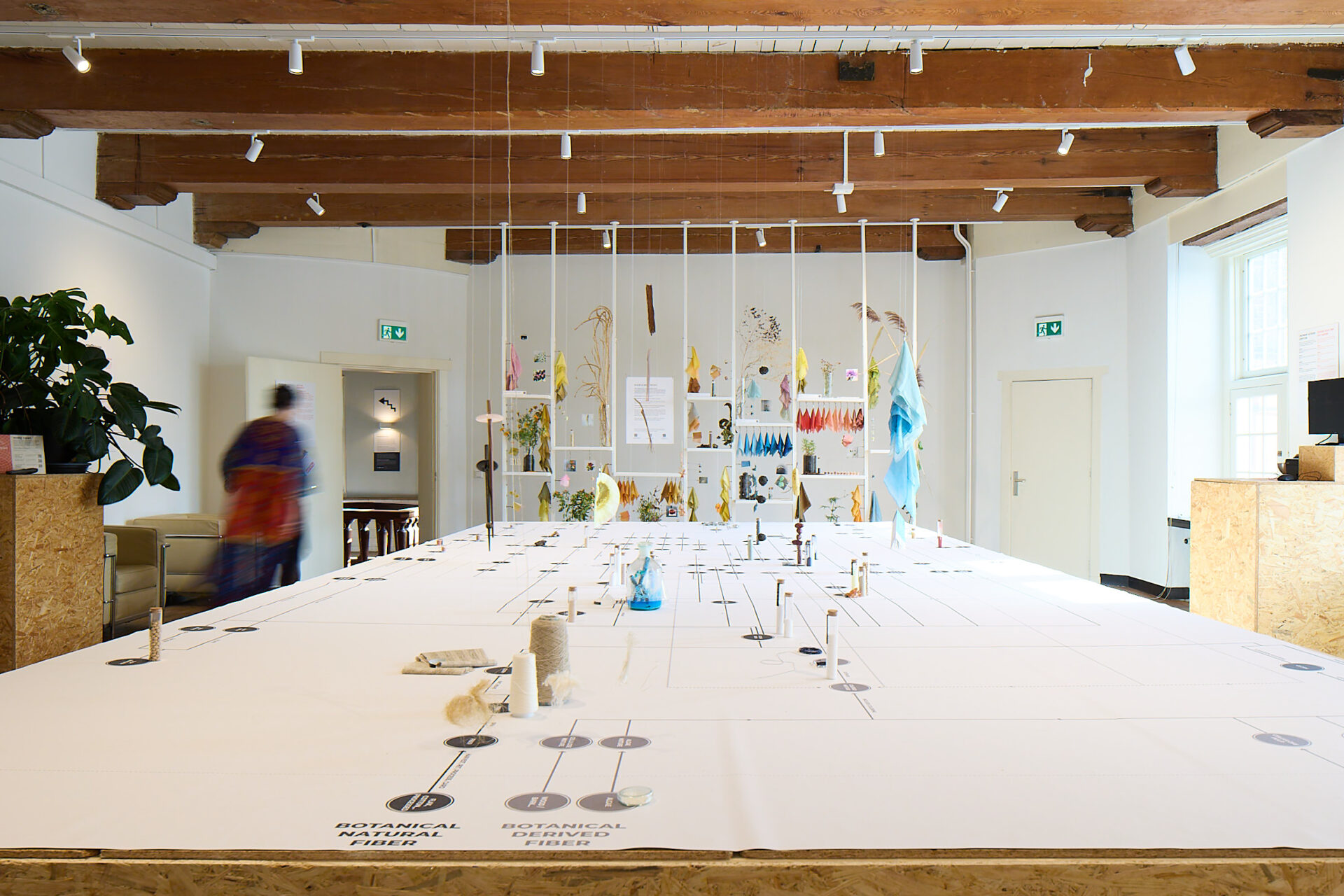
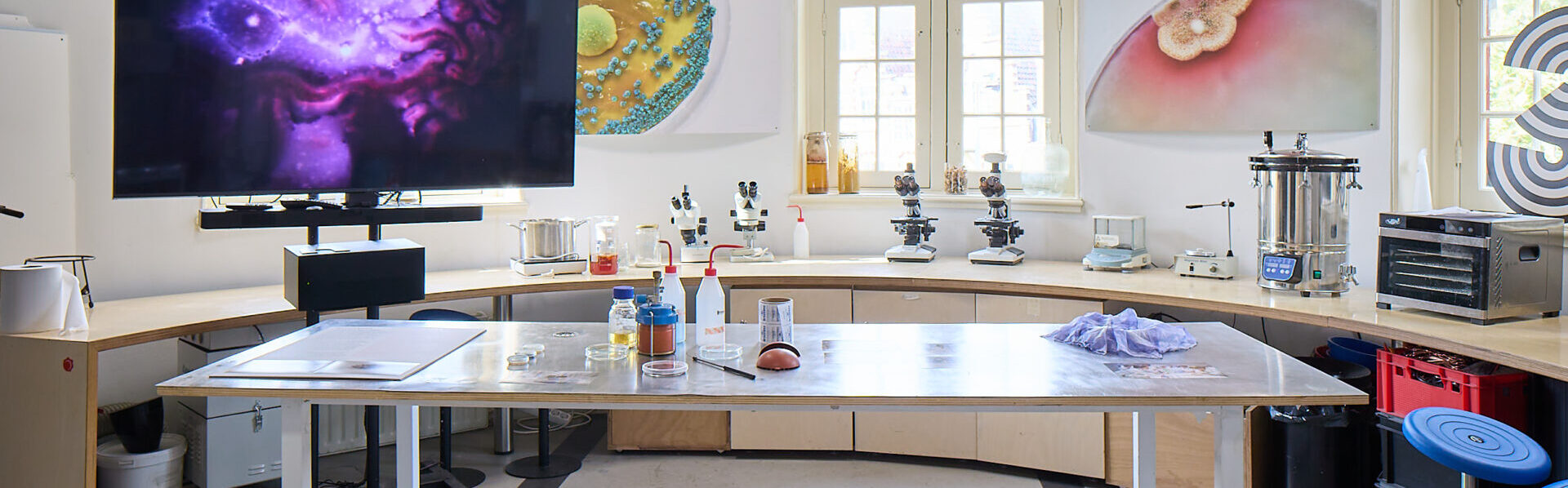
For 10 years, Waag Futurelab has researched textiles and natural dye-making from within its TextileLab, located at the heart of the city of Amsterdam. Chromatic Relations exhibits this legacy, showcasing the urban environment as potential source for natural colors. 


Cities as ecologies

The urban environment may not be the first place that comes to mind when you think of gathering resources for natural colors. Yet it’s an abundant landscape that holds many opportunities. Cities are ecologies—interwoven with living matter, layered histories and circular potential.

Through natural dye-making, we reconnect with ecological cycles throughout the urban landscape, transforming our perception of the city from a concrete jungle into a living ecosystem. It teaches us to attend to plants and to revaluate and repurpose overlooked natural resources. It draws our attention to the ecologies that we are part of and reveals the colorful potential that grows everywhere around us – right under our feet.

Textile heritage

The history of the city of Amsterdam incorporates 750 years of textile heritage, woven into street names like Verversstraat, Staalstraat, and Raamgracht. This exhibition threads Amsterdam’s rich artisanal history into present-day technical innovation. Interweaving traditional craft with digital technology, Waag demonstrates hybrid practices within its TextileLab in which digital tools amplify rather than replace traditional knowledge.


Urban local production

Chromatic Relations is not just about color. It is about how we see, source and make in relation to the world around us. It is about building cultures of care, understanding the ecosystems we already inhabit and renewing our relationship with urban environments. By engaging with materials, processes and systems, the exhibition explores what local production means in an urban context. What futures emerge when we make space for collaboration between craft, ecology and technology? 

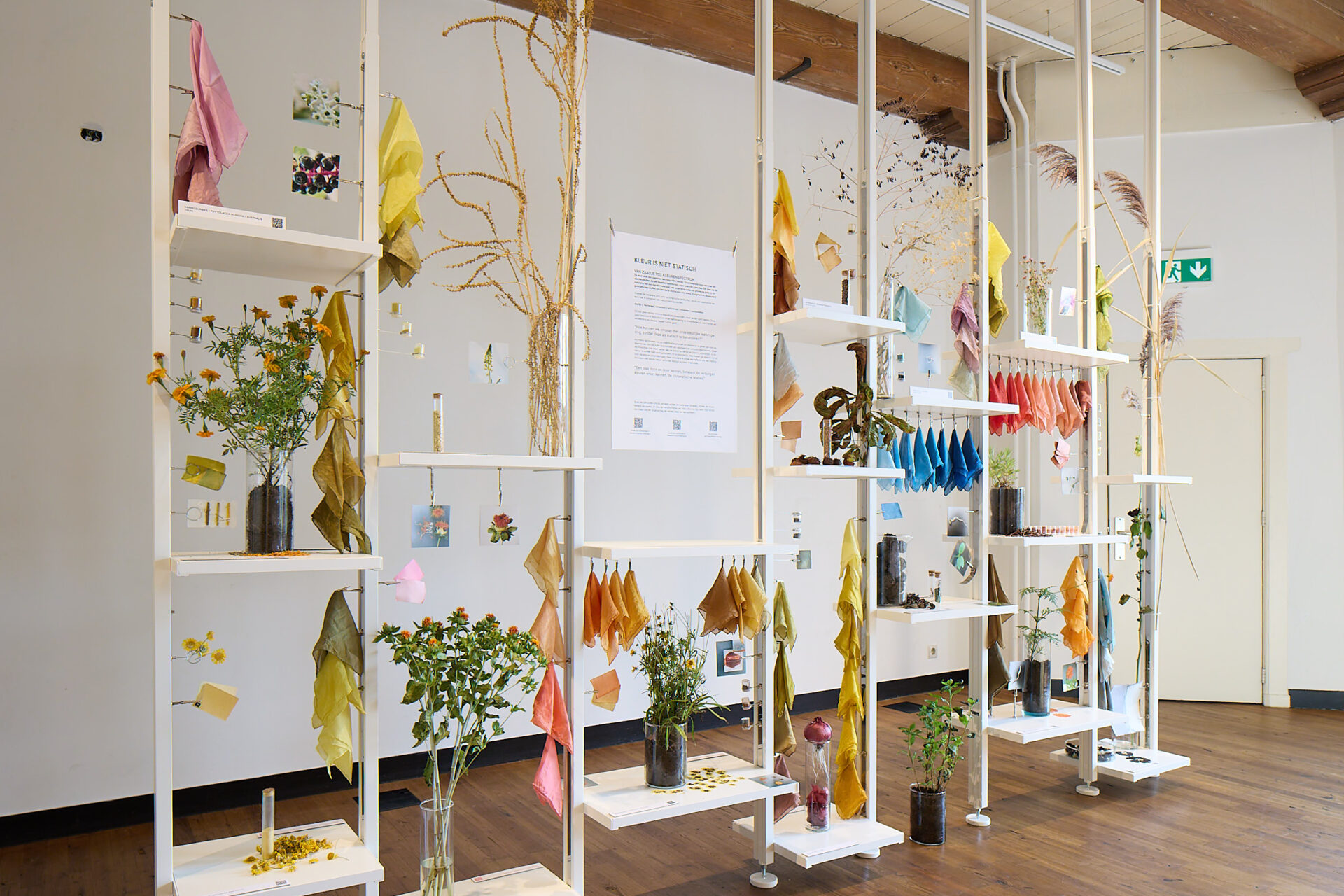
Color Wall

colour-wall-textilelab-waag

Color is not static

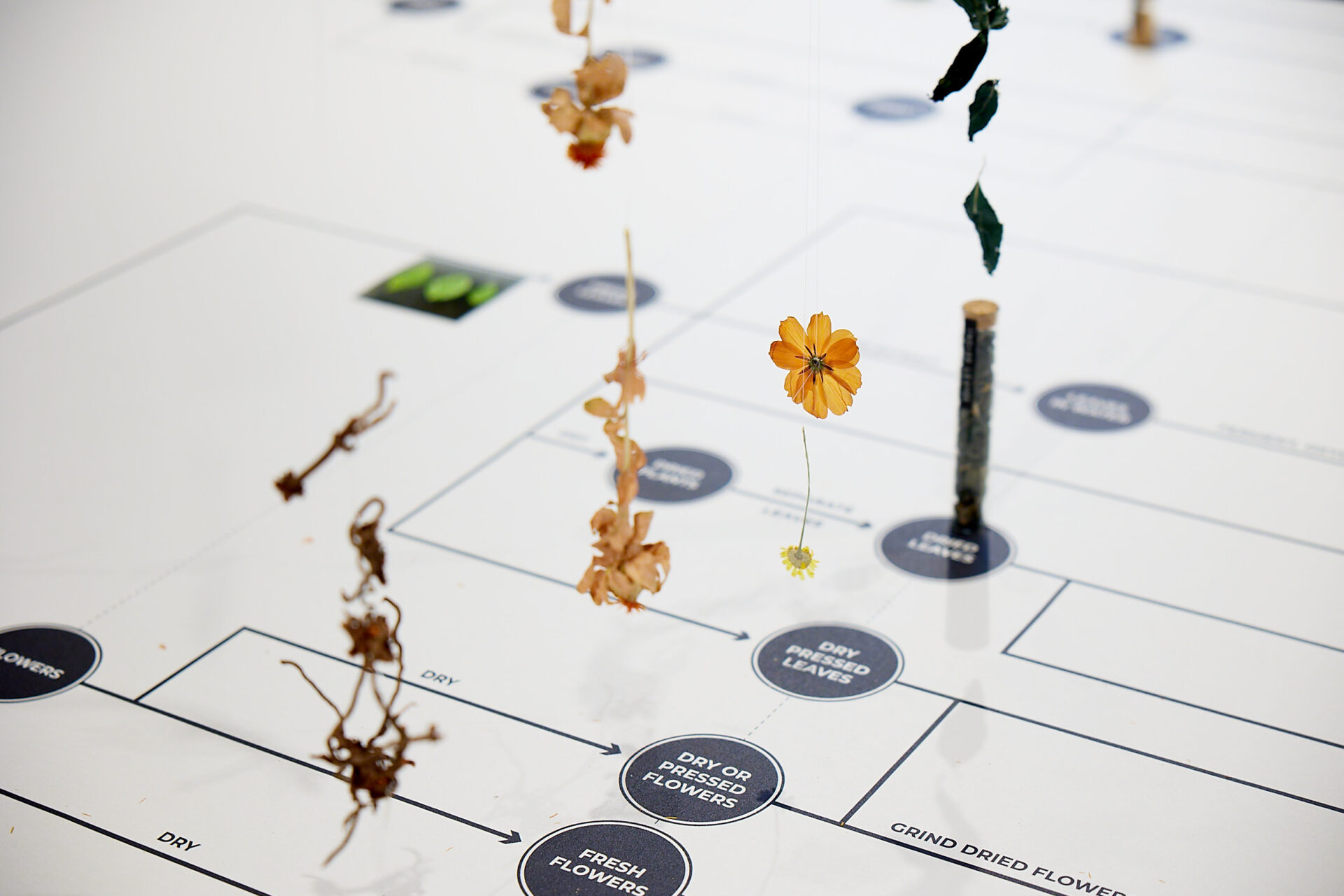
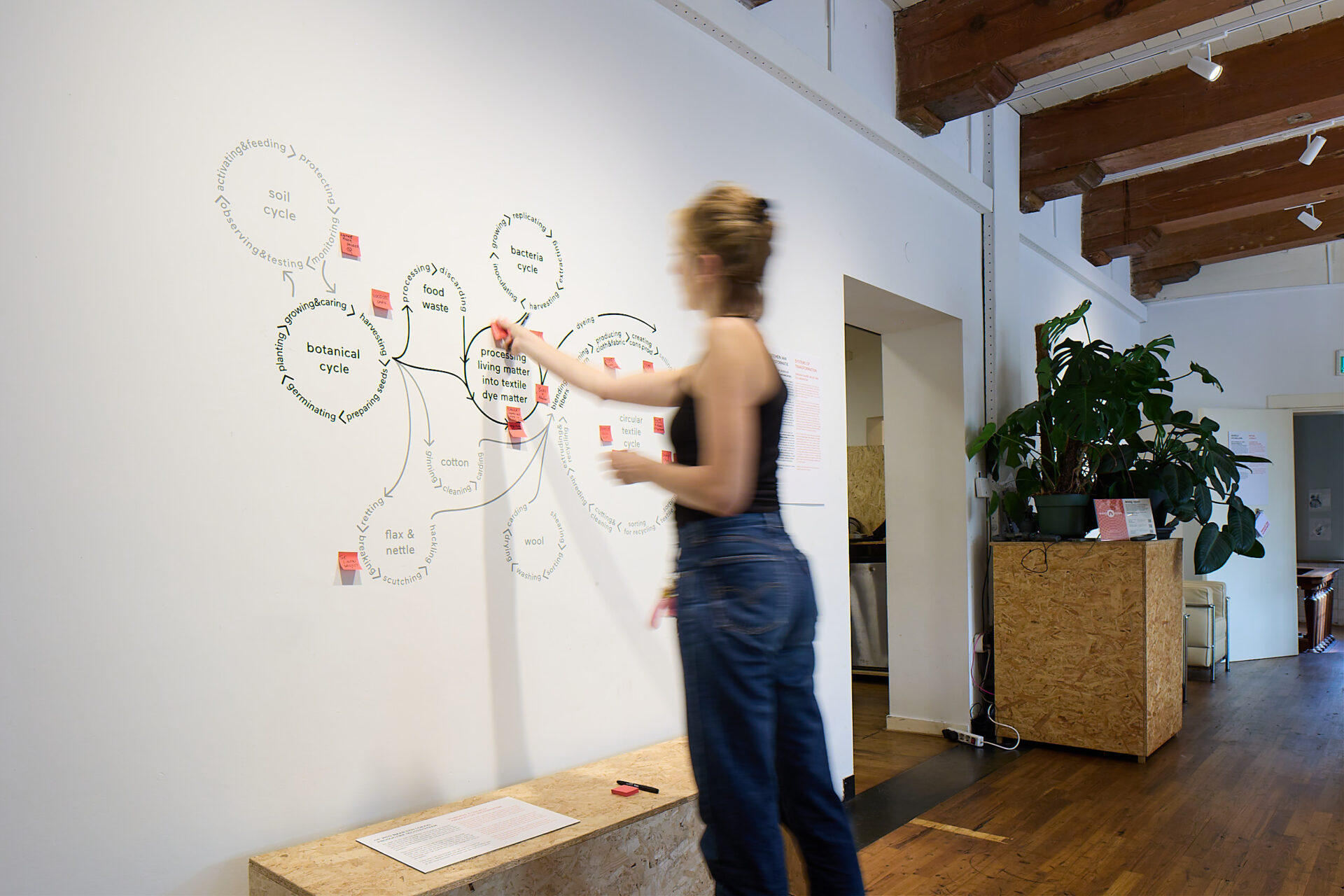
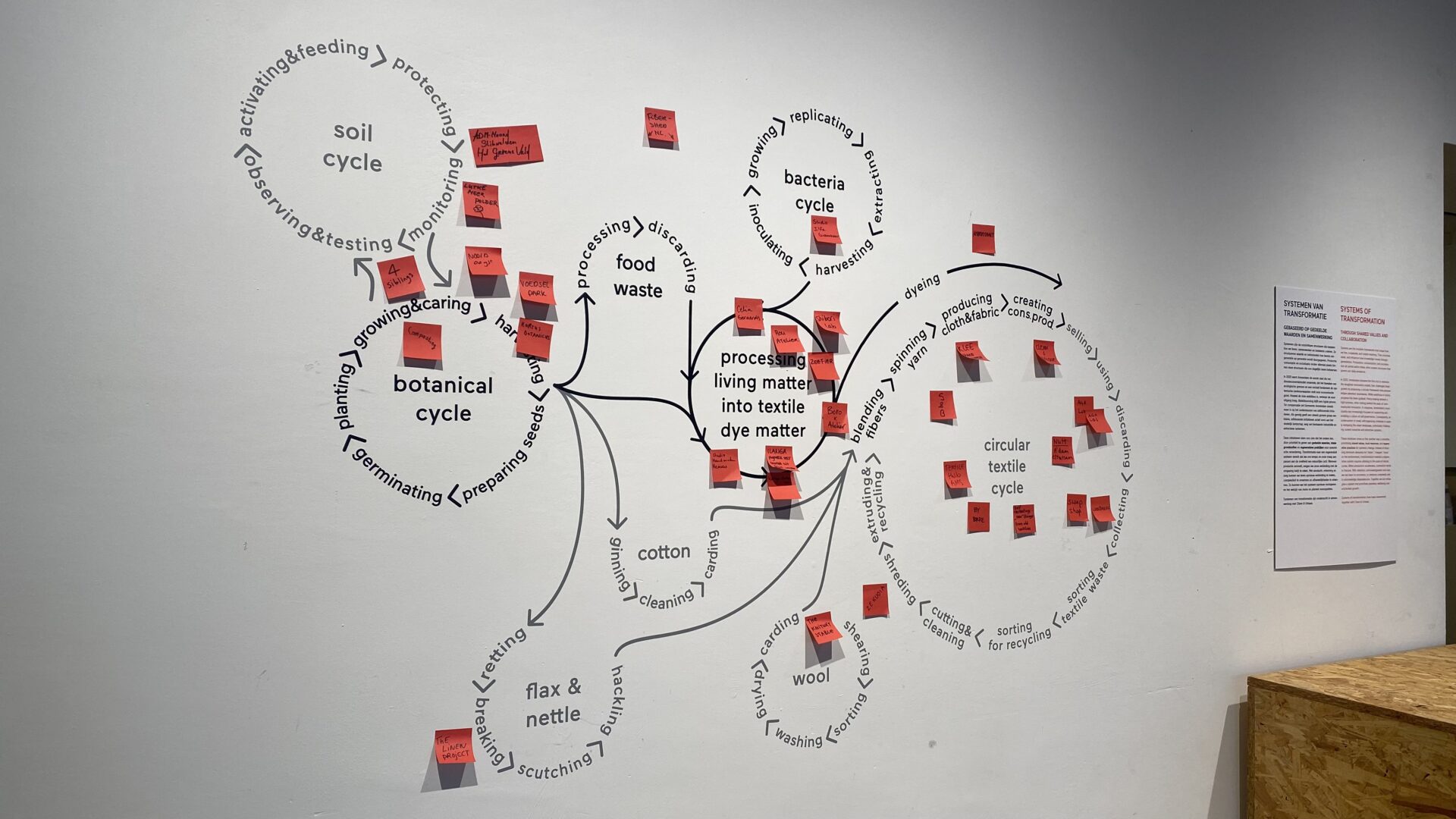
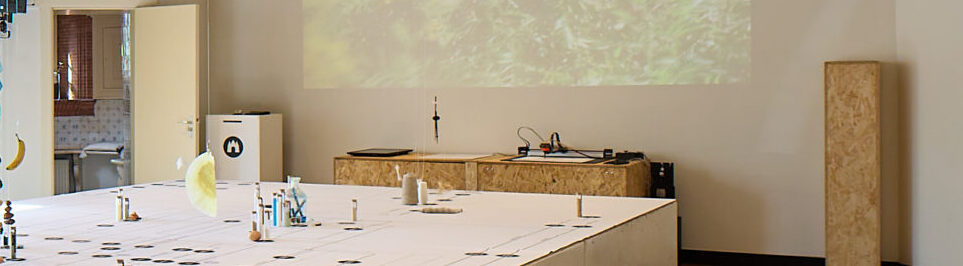
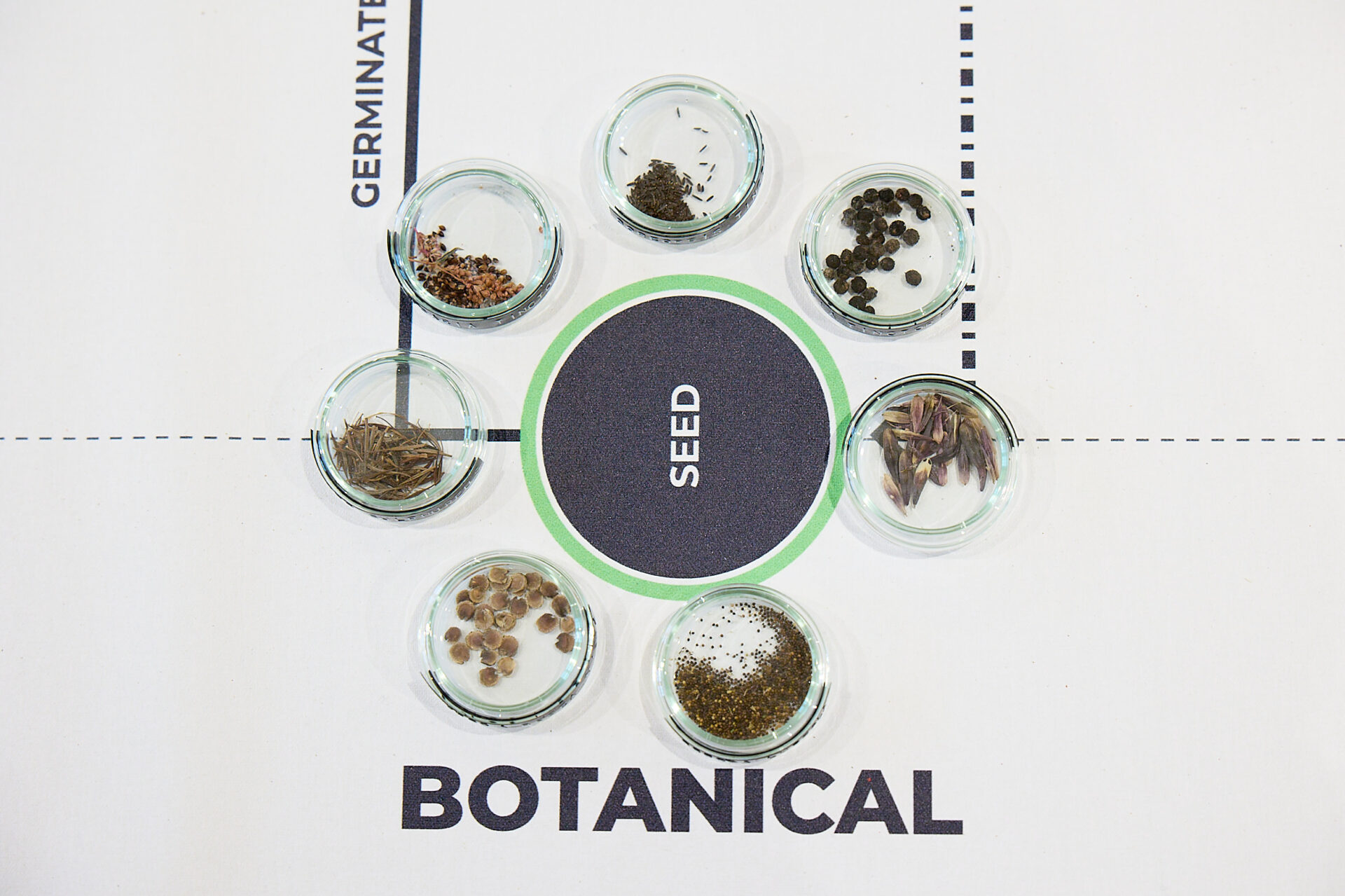
The city offers an abundance of natural colors. This installation presents a snapshot of dye matters we encounter daily, though often without noticing it. Each section tells a story of transformation, a process, a cycle, a conversation with time: from botanical seeds to growing matter, to harvested dye sources and finally to their expressed colors—on fiber, in pigment, as dye.
With a focus on botanical dyes, this installation opens into a taxonomy with 6 domains of natural dye matter

animal | bacterial | botanical | composite | fungal | mineral

Taxonomies here are not endpoints—they are starting points. The domains are not strict scientific categories, but rather open frameworks. This open taxonomy serves as a tool for noticing and engaging with our surroundings, within the local living world.
"How can we engage with the color-producing life around us without fixing it in place?"

As humans, we rely on systems of classification to make sense of what we observe. If we treat such taxonomies as fixed and finished, we risk freezing the fluidity of life into static names and linear orders. Here, instead, we make space for variation and exceptions. In nature, nothing is truly isolated or immutable. This installation is both a reflection and a proposition: that color, like nature itself, is not static but relational.

"To know a place deeply, is to know its hidden colors, its chromatic relations."

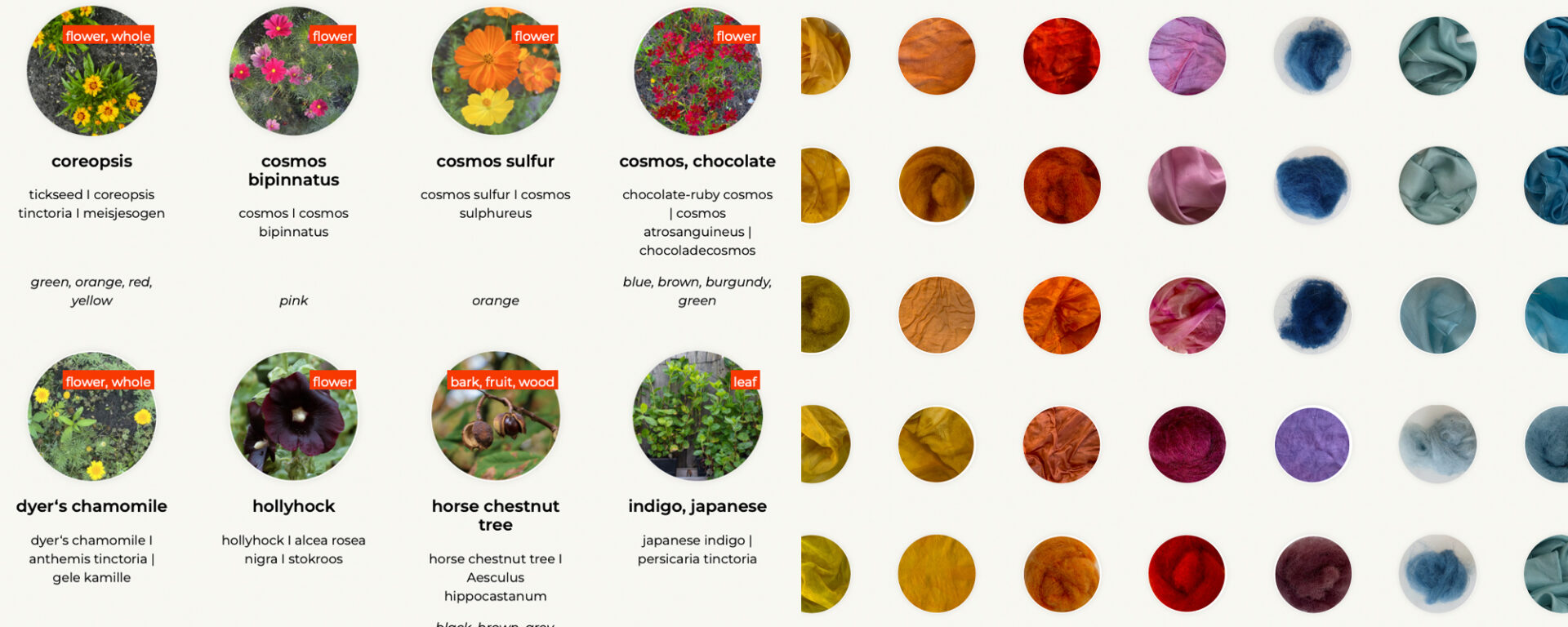
Open catalogues of local resources

Color is all around us, yet often hidden in plain sight.
Through the plant and color catalogues, knowledge about the urban resources is made available to growers, dyers and curious minds.
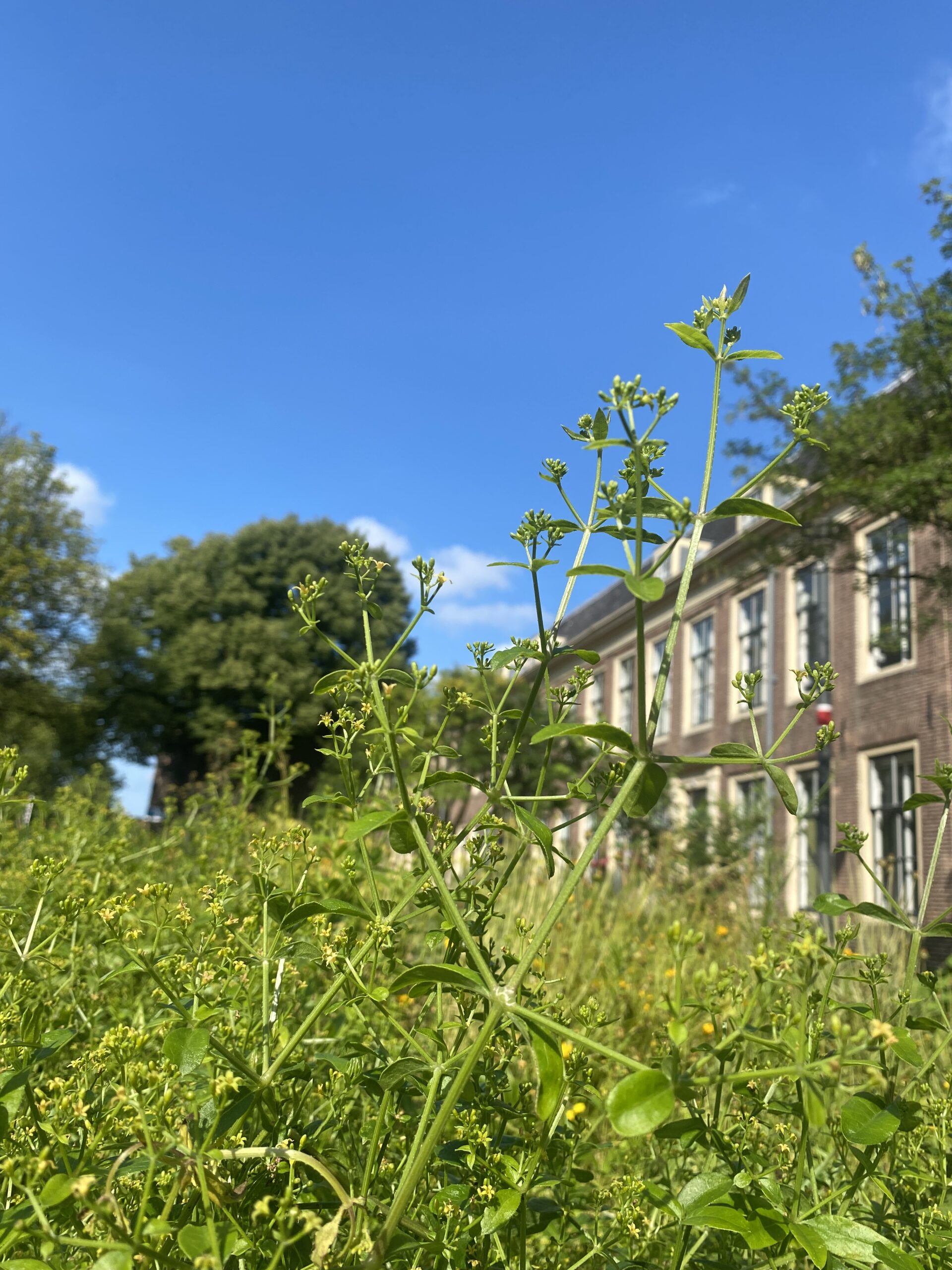
Explore what has been growing all around you, all along!

Processes Map

Practices of color - an invitation to explore

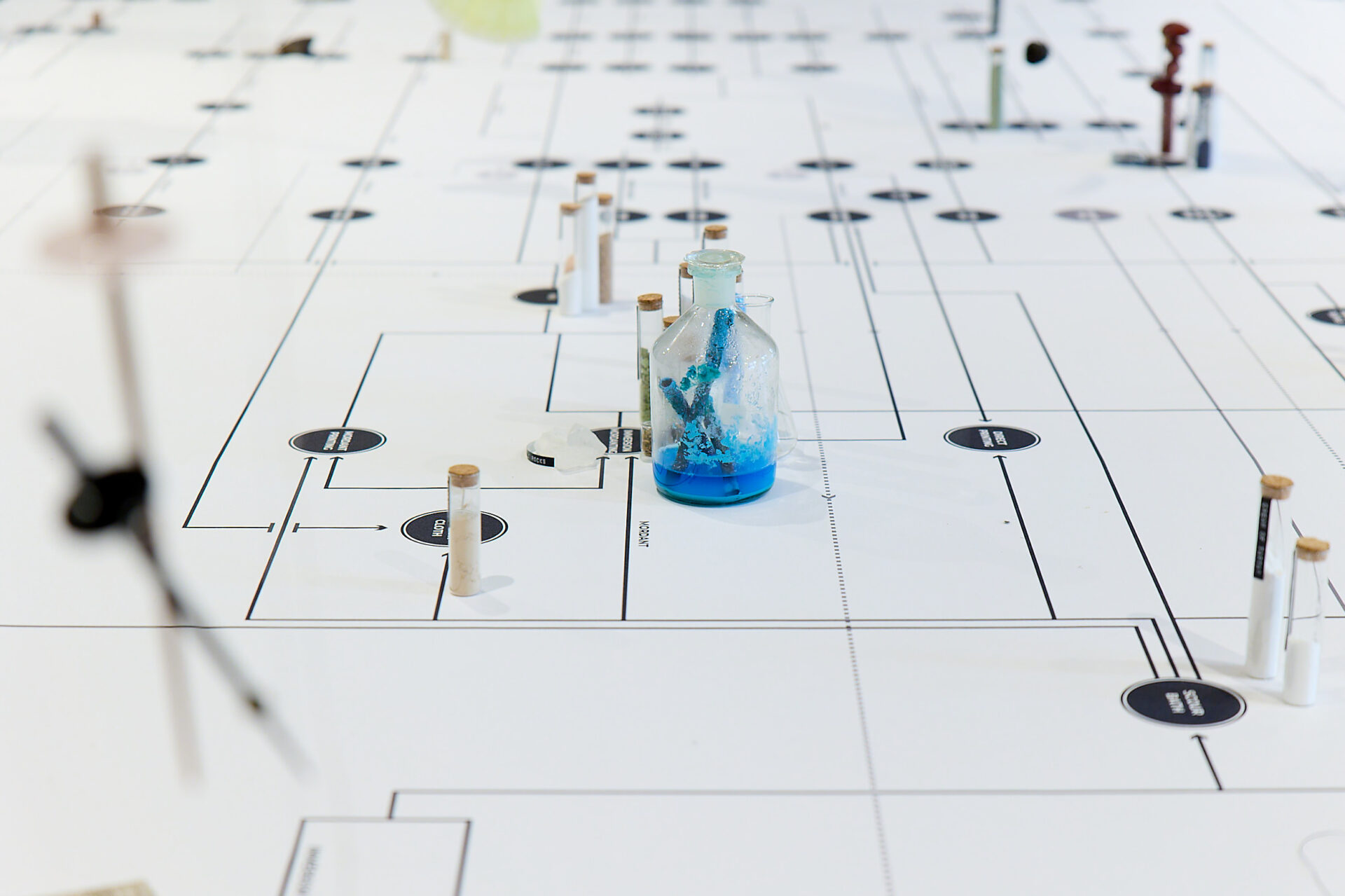
This map traces more than a path—it traces practices of color. It reveals how local resources, heritage techniques and contemporary knowledge relate to one another.
Each flow—between fiber, mordant, dye source and human action—forms a layered system of decisions and reactions. The map shows not just how we dye, but why: drawing on centuries of embodied knowledge, shaped by place and reinterpreted through today’s tools and understanding. Rather than offering fixed answers, it opens a landscape of chromatic relationships—between material and maker, locality and method, observation and experimentation.

This is not a guide. It is an invitation.

Take your time and explore the practices of color.

Systems of transformation

Through shared values and collaboration

Systems are the invisible frameworks that shape how we live, cooperate, and create meaning. They structure value and influence how knowledge moves through generations. Production, consumption and socialisation all unfold within these often unseen structures that govern our daily existence.
In 2020, Amsterdam became the first city to embrace the doughnut economics model, that challenges linear growth by proposing a circular framework that acknowledges planetary boundaries. While ambitious in vision, progress has been gradual. Policy-making remains a rigid process, often trailing behind the pace of community-led innovation.

in collaboration with Clean & Unique

In response, Amsterdam's municipality has increasingly focused on supporting and enabling a culture of self-governance. Consequently, an undercurrent of small, self-organising initiatives is quietly reshaping the urban landscape, collectively challenging current industrial and extractive systems.
These initiatives show us that another way is possible, prioritising shared values, local resources, and regenerative practices for systemic change. Instead of imposing dominant demands for ‘faster’, ‘cheaper’, ‘more’ on the environment, transformation towards a regenerative system requires attuning to the pace of natural cycles. When production accelerates, connection tends to fracture. With attention, acknowledgement and care we can learn to reconnect, to embrace complexity and to acknowledge dependencies. Together we can reimagine a system that prioritises planetary wellbeing over unchecked growth.
100% Amsterdam textiles

Textile from urban sources

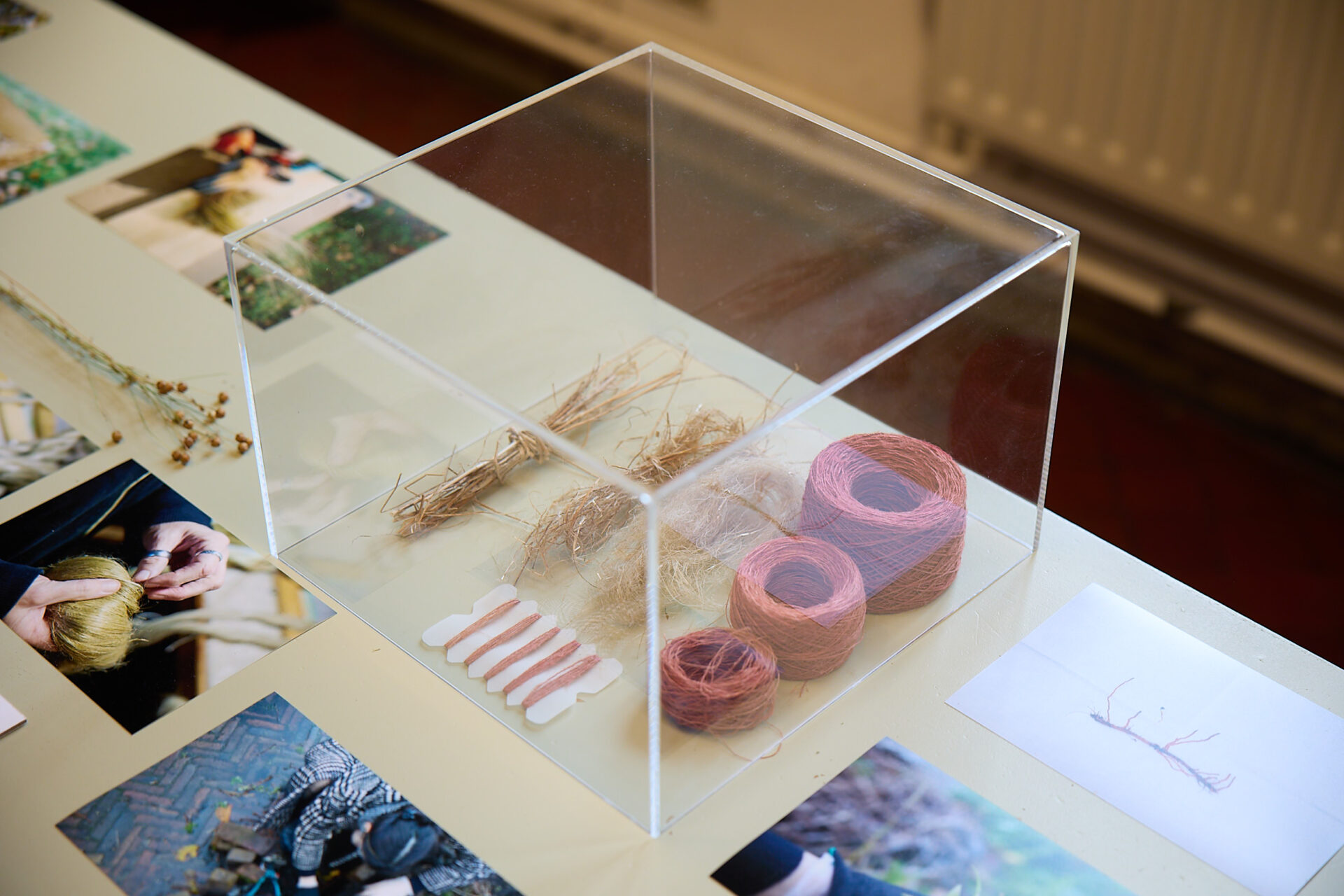
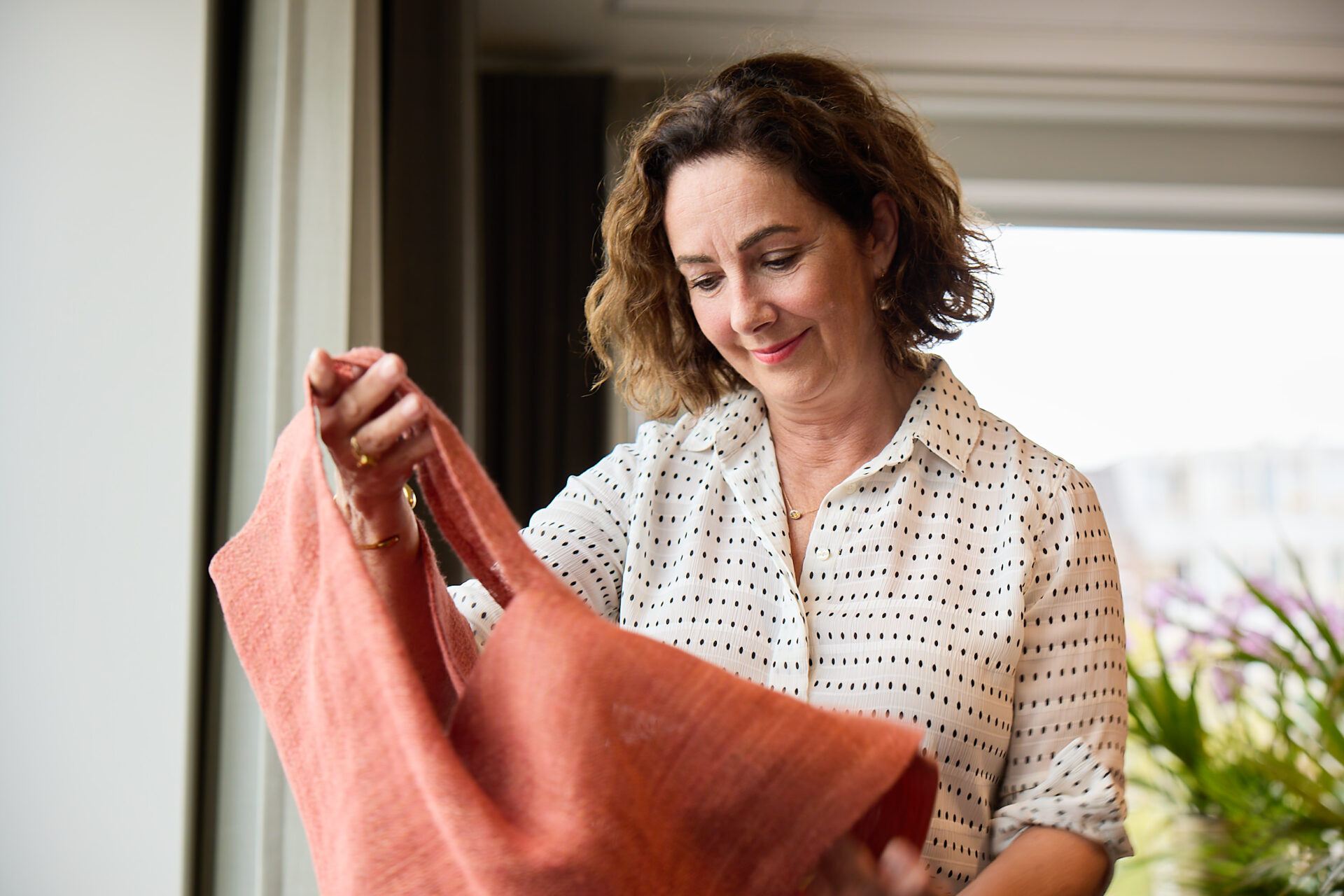
In celebrating Amsterdam’s 750th anniversary, Waag Futurelab and The Linen Project joined forces to produce a 100% Amsterdam-made garment for the mayor of Amsterdam. The cultivation of the natural materials, dyeing and the design into clothing: the textiles for this garment were completely produced within the city limits.  

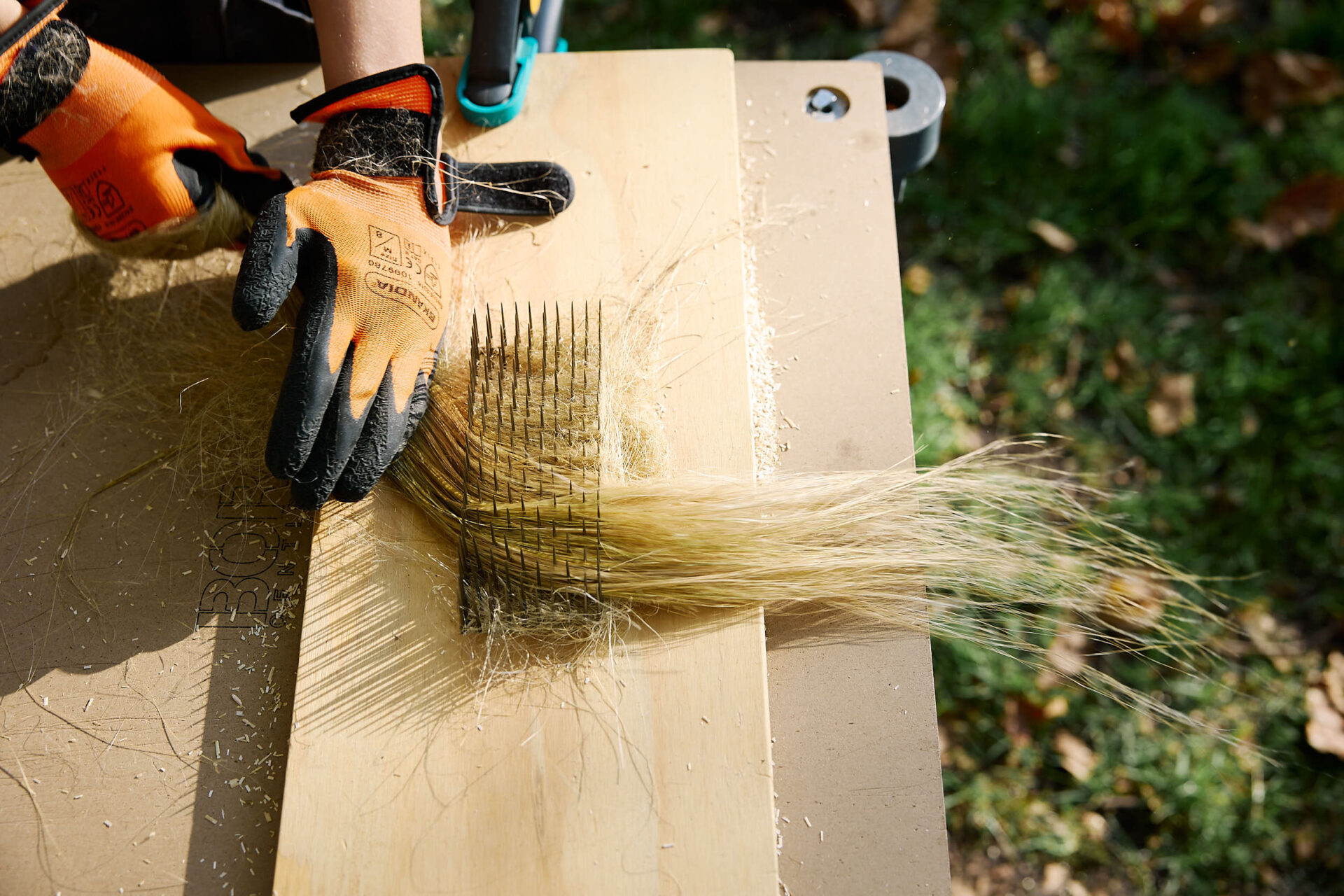
The collaboration draws on Amsterdam’s rich textile history, remembered in street names like Verversstraat, Staalstraat and Raamgracht, and departs from the idea that craft knowledge is essential to address contemporary sustainability issues. With only 25m² of flax, the process from seed to garment leaned heavily on the expertise and knowledge of the makers. Unfortunately, it is this knowledge and skill that is often lost because of production optimisation in the textile industry.

100% Amsterdam textile is an ode to the maker culture based on circular economic principles and celebrates the craft and these makers with their attention, care and love for the material.

Concept, coordination & realisation — Waag Futurelab: Cecilia Raspanti, Isabel Berentzen; The Linen Project: Guusje Heesakkers, Joan den Exter, Willemien Ippel

Flax growing, harvesting — G. Heesakkers
Flax processing — expert Marieke van Mieghem; guiding C. Raspanti, I. Berentzen, I. Boszhard, M. Smith, J. den Exter, W. Ippel
Dyes growing & harvesting — C. Raspanti, I. Berentzen

Spinning — Erna Evers, Geeskegrietje van Dijk, Heleen Lorijn 
Dyeing — C. Raspanti, A. Civalleri
Weaving — Eva Klee 
Garment design & confection — Charlotte Bakkenes 

Photography — Wardie Hellendoorn

BioShades - bacterial dyeing

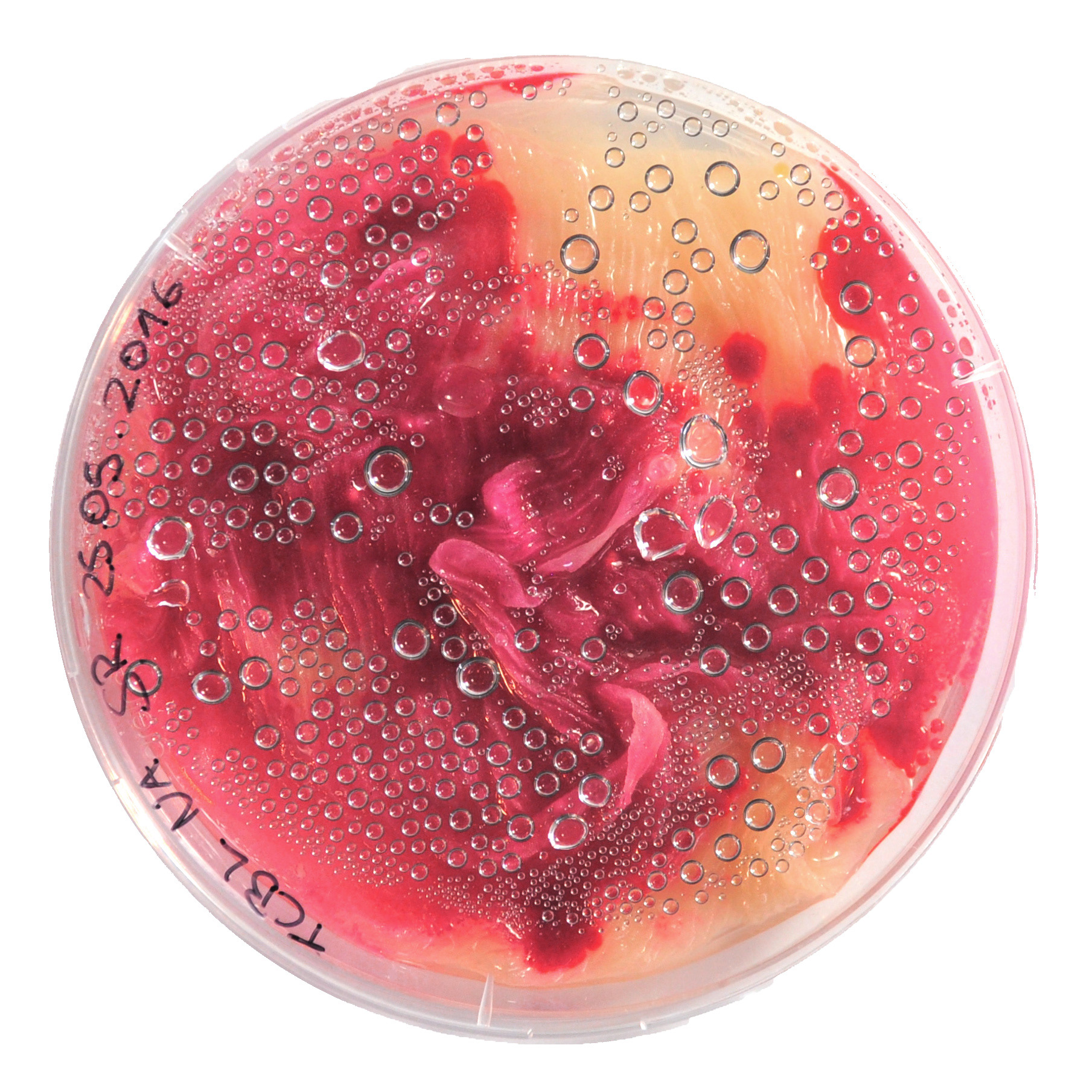
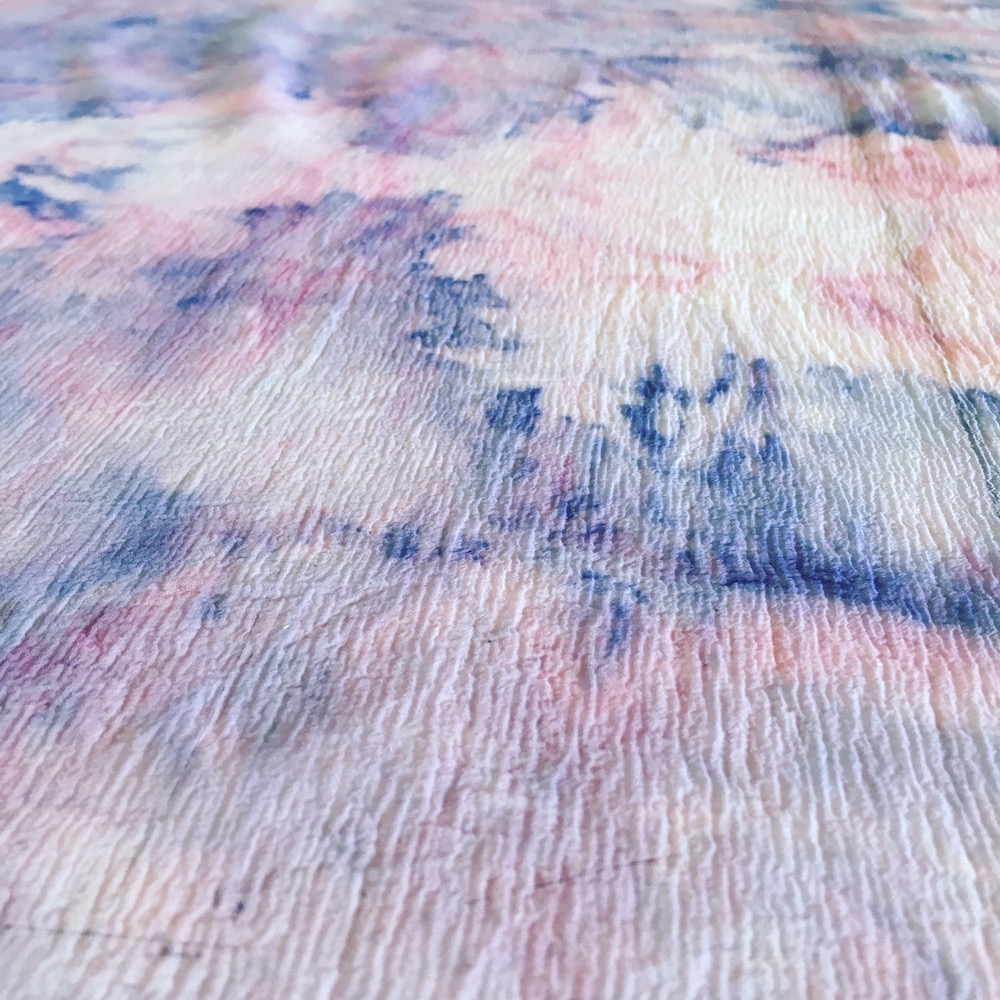
Since 2015, Waag has explored the possibilities of microbial dyeing—rethinking how we relate to our materials, our environment, and to the act of making itself. This ongoing research project titled BioShades was initiated from within Waag’s TextileLab and further developed through interdisciplinary collaboration between microbiologists, artists, designers, scientists, and thinkers. Together, they explore how bacteria can be made to release vibrant, local biochromes without the use of toxic chemicals and with minimal amounts of water. This way, they are working towards a sustainable, post-industrial textile future.

BioShades is a project grown in the lab but intended for the world. Since 2018, the research has been distributed globally as a fully open-source initiative, engaging textile practitioners across continents through workshops, labs, and local explorations. This decentralised model broke open conventional barriers to sustainable innovation—sharing not only the how, but also the why. BioShades emerged as both a practical and systemic intervention into the textile industry and field. It exemplifies the potential of TextileLabs for open knowledge and collective experimentation.

The work invites a shift—not only in materials, but in mindset.

Crucially, BioShades practices encourage us to acknowledge the agency of the bacteria themselves. In nurturing these microbes, we are changed: our rhythms slow, our attention deepens, and we begin to see making not as extraction, but as relation.

Experimenting with Urban co-production

What does it mean for the city to become an enabling environment for the growth of natural dyes?

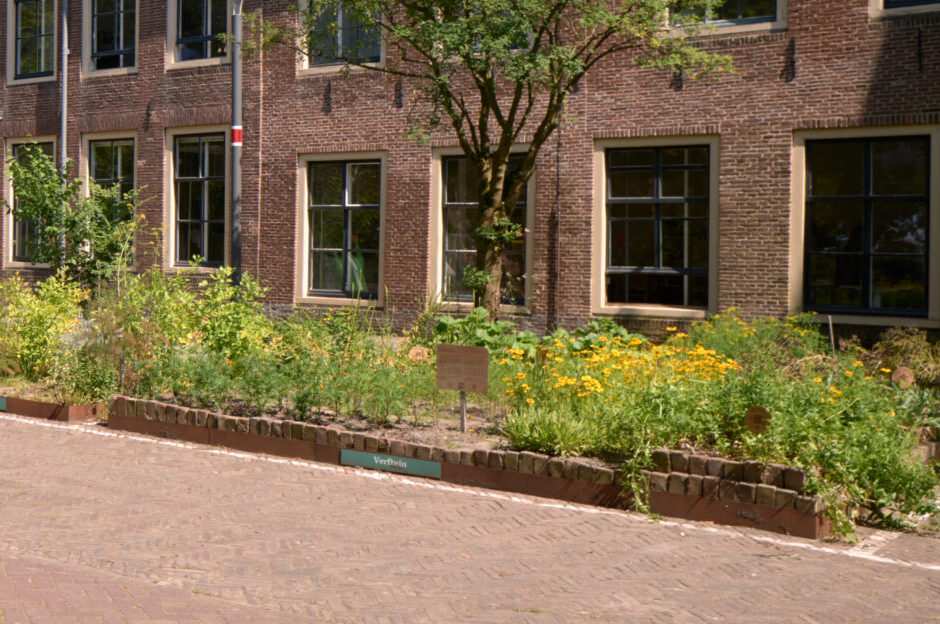
Since 2023, Waag has been cultivating botanical dye resources in the heart of Amsterdam at Marineterrein. Here, a 25 square meter dye-garden has become a living laboratory - transforming 2 parking spots into a thriving garden. The garden is part of the ParkxPark pilot, initiated by Bureau Marineterrein, which has been redeveloping a former military complex into an experimental innovation environment. As Amsterdam transforms 10.000 parking spots into green spaces, this pilot invited locals to reimagine what these new green urban spaces could become.

The dye garden plays a crucial role in understanding the intricate relations between growing matter and citizens. It has provided context and space for workshops for citizens engagement and knowledge exchange, for exploring the relation between plants and their gardeners, and for welcoming a thriving community of pollinator insects. The dye garden fostered a sense of connectedness - between people, animals and plants, all within this urban context.

interactive tool

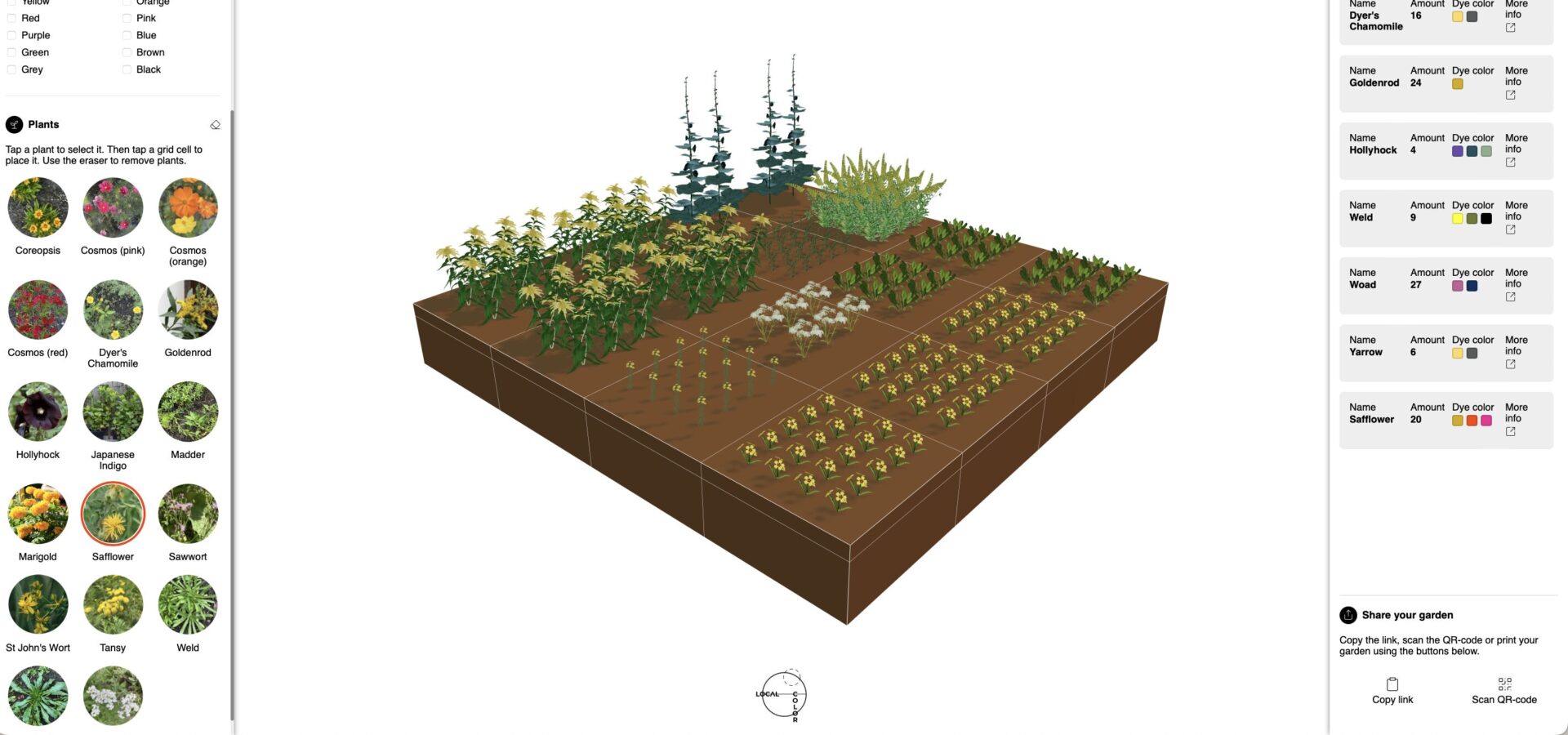
Design your own garden!

Excited to have your own dye garden? Build one digitally! Explore which plants you can grow to create the most beautiful natural colors.

Step 1 - Select the conditions of your garden and the colors you would like to produce.

Step 2 - Select the plants you want to grow and place them on your garden

Step 3 - Learn more about the plants and about how to take care of them by clicking on the link.

Step 4 - Take your QR code with you to revisit and further develop your garden design at home.
 
This garden tool was developed by Bink Keizer, Esther Zoetelief & Nicholas Faas during the minor ‘Information design’ of Amsterdam University of Applied Science, under guidance of Waag Futurelab. Additional technological development by Nicholas Faas & Waag’s team.

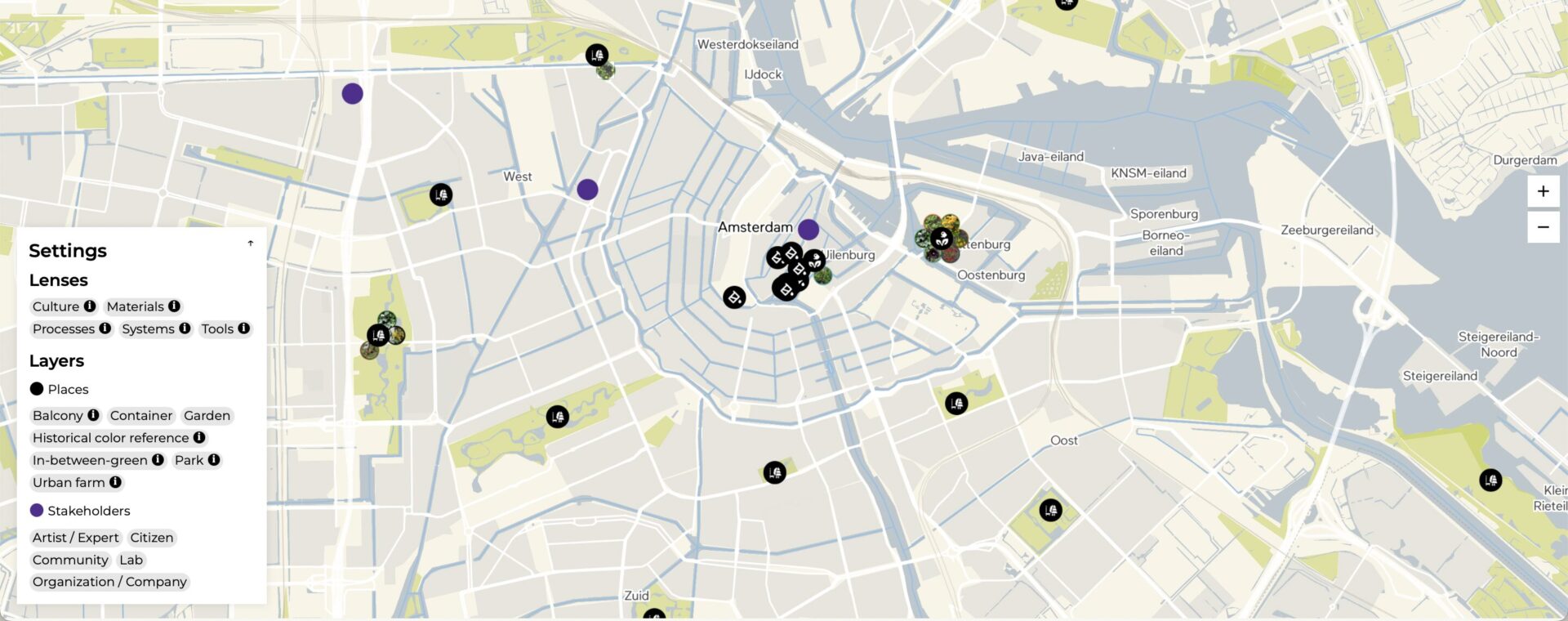
amsterdam interactive map of botanical colors, local color project waag

Explore your surroundings

Heritage as bridge for innovation

Tracks4Crafts and the Hapticolor printing machine

When a craftsperson’s expertise meets programmable tools and a technologist’s expertise meets traditional craft, new possibilities emerge.

Where craft meets code

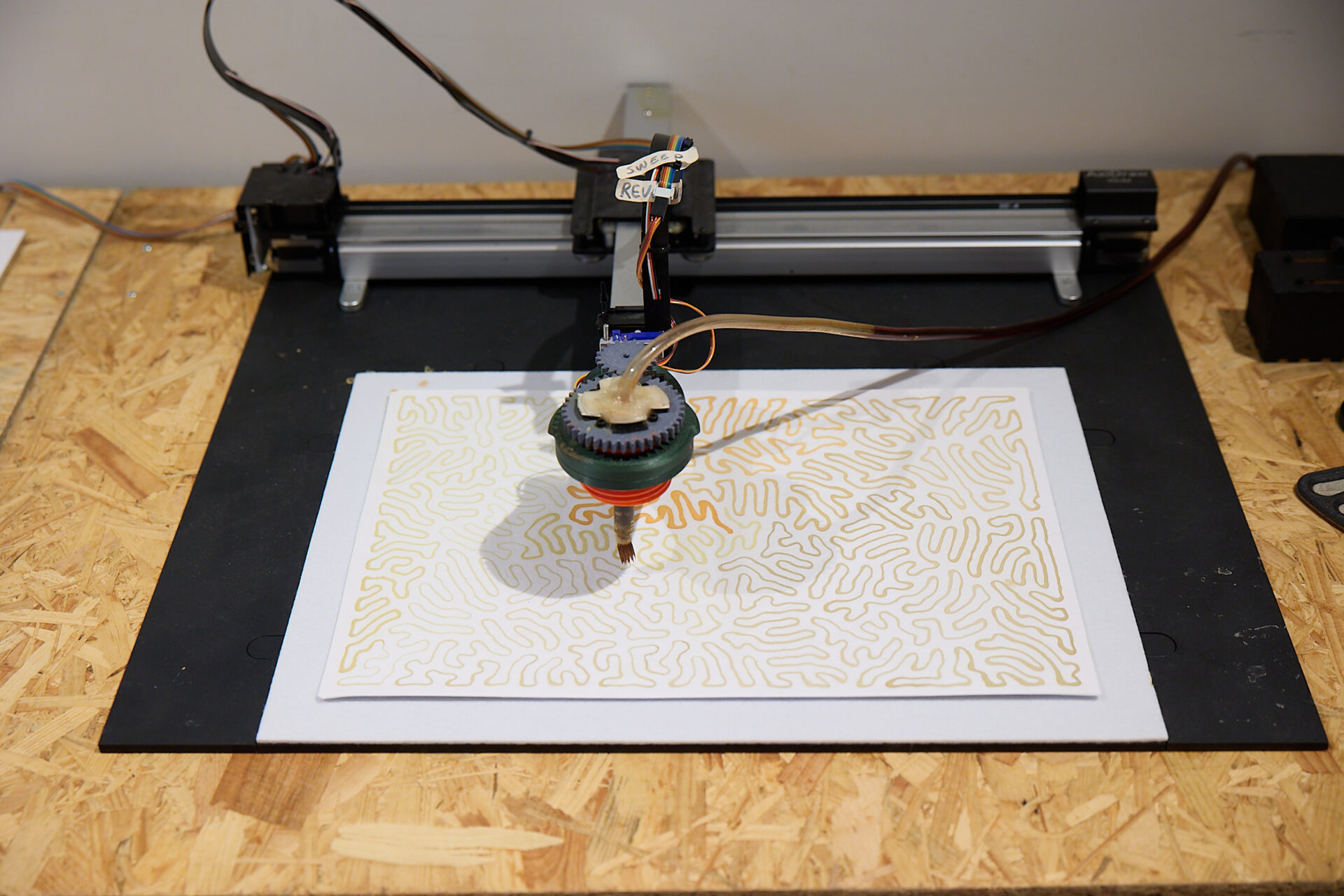
Waag explores how hacking the machines of a classic Textile- or FabLab can create new opportunities for craftspeople to innovate the craft of printing on textiles, using natural dyes and their traditional processes. The approach integrates tangible sensors within the machine, that allow craftspeople to guide it through touch; code that responds to the subtle variations natural dyes demand; and interfaces that honour both spontaneous creativity and systematic production. The result is the HaptiColor machine: a textile printer for depositing biochromes with an interactive and haptic input.
This research is informed by the model of Craftsmanship 2.0, which describes a hybrid craft that recognises the power of both human and technological agency. By creating workflows that value both human agency and machine capability, we empower technologists and craftspeople—bridging between creative and embodied knowledge with technological interventions and hacked tools.

Mutual Literacy

A glossary for knowledge exchange

Words can have different meanings in different contexts. When different training, languages and jargon meet, a shared vocabulary is needed: a mutual literacy to truly understand each other and to cultivate a culture of values-driven collaboration. Shared language supports us in bridging knowledge and experiencing different practices.

One person might speak through design, another through protocols. One may observe, while another acts. Mutual literacy is about creating enough common ground that different disciplines discover possibilities in each other’s language.

Stories

Chromatic Relations are deeply nurtured by stories.
Stories of people and plants, of matter and life, of practices of alchemy and chemistry. Stories that embody relations – shed light on the way we see the world around us. Local color believes that to see the unseen we need to take the time to explore our close surroundings through everyday stories, listening to and experiencing our city with our personal senses and collective intelligence.